Affiliate disclosure: As an Amazon Associate we earn from qualifying purchases. CopyKitchen is reader-supported; cost and savings references are general and your local prices will vary.
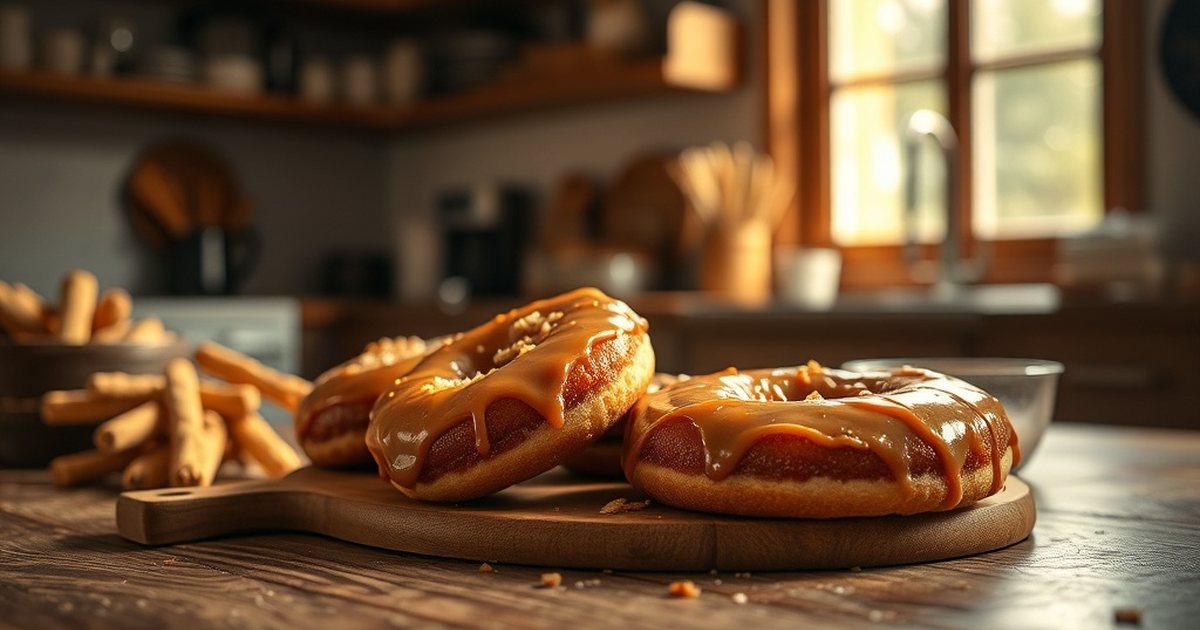
Krispy Kreme glazed doughnuts occupy a singular place in American food culture. That blinking “Hot Now” sign is enough to make reasonable adults execute a U-turn on a highway. The magic is a yeast-raised dough that fries up feather-light, then gets dunked in a warm glaze that sets into a crackly, translucent shell within minutes. It is a texture-and-sweetness combination no other doughnut chain has fully replicated, and the reason people talk about Krispy Kreme with a specific kind of reverence reserved for things that are genuinely, almost unfairly good.
Making them at home puts you in control of the one variable that matters most: timing. Krispy Kreme’s entire reputation is built on eating that doughnut within minutes of it leaving the fryer, and when you make a batch yourself, you get to live inside that window for the whole dozen. This recipe nails the two defining characteristics — a pillowy, melt-on-contact crumb and that glaze that shatters slightly when you bite through it — at a fraction of what you’d spend at the counter.
About Krispy Kreme’s Glazed Doughnuts
What separates a Krispy Kreme original glazed from every other yeast doughnut is the dough’s intentional restraint. It is an enriched dough — butter and egg give it flavor and tenderness — but it is deliberately low on flour, which keeps the gluten relaxed and the finished crumb almost impossibly soft. There is no chewiness to speak of. The doughnut practically dissolves. The yeast provides a gentle fermented complexity that keeps the whole thing from tasting like sweetened air, and the frying temperature (350°F) is precise enough to cook the interior through while keeping the exterior pale golden rather than deeply browned.
The glaze is architecturally simple: powdered sugar, whole milk, and vanilla, whisked until smooth. What makes it work is temperature timing. When a still-hot doughnut hits the glaze, the liquid flows over it in a thin, even sheet and then crystallizes as it cools into that iconic thin, crackly finish. A warm glaze on a cool doughnut sits thick and sticky and never sets right. The entire process — from fryer to rack to glaze bowl — should happen within about sixty seconds per doughnut for the most authentic result.
Glazed Doughnuts: Restaurant vs. Homemade Cost
| At Krispy Kreme | Homemade (12 doughnuts) | You Save |
|---|---|---|
| $13.99 | $3.02 | $10.97 (78%) |
Krispy Kreme price is the approximate cost of a dozen original glazed doughnuts at Krispy Kreme. Homemade cost is calculated from
US average grocery prices (US BLS Average Price Data, May 2026).
Ingredient cost breakdown
| Ingredient | Amount | Cost |
|---|---|---|
| all-purpose flour | 2.5 cup | $0.38 |
| active dry yeast | 2.25 tsp | — |
| whole milk, warmed to 110°F (for dough) | 0.75 cup | $0.20 |
| granulated sugar | 3 tbsp | $0.09 |
| unsalted butter, softened | 2 tbsp | $0.20 |
| large egg | 1 each | $0.18 |
| fine salt | 0.5 tsp | — |
| vanilla extract | 1 tsp | — |
| vegetable oil, for frying | 2 cup | $1.23 |
| powdered sugar | 1.5 cup | $0.68 |
| whole milk (for glaze) | 0.25 cup | $0.07 |
| Total (makes 12 doughnuts) | $3.02 | |
Pantry staples not counted: active dry yeast, fine salt, vanilla extract (negligible cost).
Nutrition (estimated per serving)
Estimated from listed ingredients using USDA FoodData Central reference values. Actual values vary with brands, portions, and preparation.
How Much Does It Cost to Make Krispy Kreme’s Glazed Doughnuts at Home?
A full batch makes 12 doughnuts for about $3.02 in ingredients — roughly $0.25 per serving. Ordering the equivalent at Krispy Kreme runs around $13.99, so making it yourself saves about $10.97 (78%). Those numbers come from current US average grocery prices (US BLS Average Price Data, May 2026), not estimates — the per-ingredient breakdown is in the table above. The savings are this large because you’re buying staple ingredients in bulk instead of paying for a prepared, served dish, and a single batch stretches across many servings.
Why Make It at Home?
Beyond the cost savings of roughly a dollar per doughnut versus retail, making these at home means you eat them at the exact moment they are best — hot, glazed, and still steaming inside. No chain can replicate that for you; even Krispy Kreme’s own Hot Now window involves a line, a drive, and a few minutes in a bag. At home, the fryer is the counter and the counter is the table.
Ingredients for Copycat Krispy Kreme Glazed Doughnuts
Here’s the full ingredients list you’ll need to make Krispy Kreme Glazed Doughnuts at home:
- 2.5 cup all-purpose flour
- 2.25 tsp active dry yeast
- 0.75 cup whole milk, warmed to 110°F (for dough)
- 3 tbsp granulated sugar
- 2 tbsp unsalted butter, softened
- 1 each large egg
- 0.5 tsp fine salt
- 1 tsp vanilla extract
- 2 cup vegetable oil, for frying
- 1.5 cup powdered sugar
- 0.25 cup whole milk (for glaze)
A few ingredient notes:
- Use whole milk in both the dough and the glaze. The fat in whole milk contributes to tenderness in the dough and helps the glaze flow smoothly rather than seizing up.
- All-purpose flour gives the softest, most authentically Krispy Kreme result. Bread flour will work but produces a slightly chewier doughnut — not wrong, just different.
- Measure the powdered sugar for the glaze by weight if you have a kitchen scale (about 180g). Volume measurements for powdered sugar vary depending on how compressed the bag is, and even a small difference will make your glaze noticeably thicker or thinner.
🛒 Shop the Ingredients & Tools
- King Arthur all purpose flour
- Granulated white sugar
- Granulated white sugar
- Stainless steel mixing bowls
- Half sheet baking pan
As an Amazon Associate we earn from qualifying purchases.

How to Make Krispy Kreme Glazed Doughnuts at Home
Prep: 120 min · Cook: 15 min · Makes: 12 doughnuts
- 1. Warm the milk to 110°F — it should feel warm on your wrist but not hot. Whisk together the warm milk, yeast, and one teaspoon of the measured granulated sugar in a small bowl. Let stand for 5–10 minutes until the mixture is foamy and smells yeasty. If it does not foam, your yeast is dead or your milk was too hot; start over.
- 2. Combine the flour, remaining granulated sugar, and salt in the bowl of a stand mixer fitted with a dough hook (or a large bowl if kneading by hand). Stir briefly to distribute the salt.
- 3. Add the yeast mixture, softened butter, egg, and vanilla extract to the flour mixture. Mix on low speed for 2 minutes until a shaggy dough forms, then increase to medium speed and knead for 6–8 minutes until the dough is smooth, supple, and slightly tacky. It should clear the sides of the bowl but may cling lightly to the bottom. Resist adding extra flour — a softer dough makes a lighter doughnut.
- 4. Transfer the dough to a lightly greased bowl, turn it once to coat, and cover with plastic wrap or a damp kitchen towel. Let rise at room temperature for 60–75 minutes, until doubled in size and visibly puffy.
- 5. Turn the risen dough out onto a lightly floured surface and roll to an even 1/2-inch thickness. Cut with a 3-inch round cutter and a 1-inch cutter for holes (or use a doughnut cutter). Arrange on parchment-lined baking sheets with at least 1 inch between each. Gather scraps, press gently together, re-roll once, and cut the remaining doughnuts. Cover loosely with a kitchen towel and let rise for 30–45 minutes, until noticeably puffed and jiggling when you shake the pan.
- 6. Heat 2–3 inches of vegetable oil in a heavy Dutch oven or deep saucepan to 350°F. Use a thermometer. Fry doughnuts in batches of 2–3, about 60 seconds per side, until pale golden. They should float immediately upon entering the oil. Do not crowd the pot; the temperature drops with each batch — let it recover to 350°F before adding the next round. Remove with a spider or slotted spoon and set on a wire rack over a rimmed baking sheet.
- 7. While the doughnuts fry, make the glaze: whisk together the powdered sugar, milk, and vanilla in a wide, shallow bowl until completely smooth with no lumps. The glaze should pour off a spoon in a slow, steady ribbon. Add milk a teaspoon at a time if too thick; add powdered sugar a tablespoon at a time if too thin.
- 8. Working quickly, dip each hot doughnut face-down into the glaze, flip it to coat the other side, then lift and let excess drip back into the bowl. Return to the wire rack. The glaze will set to a crackly shell within 5–10 minutes as the doughnut cools. Serve immediately for the full experience; eat within 2 hours for best texture.

Tips for the Best Results
- Oil temperature is the single most important variable. Too low and the doughnuts absorb grease; too high and the outside browns before the center cooks. Check with a thermometer before every batch.
- Let the second rise go the full time. Under-proofed doughnuts fry up dense and doughy. The dough should look almost balloon-like and jiggle when the pan is nudged.
- Dip the doughnuts in glaze within 60 seconds of leaving the oil. The residual heat is what makes the glaze flow thin and set properly. Cold doughnuts get a thick, gummy coating.
- Fry the doughnut holes — they take 30–45 seconds per side and are phenomenal. Do them in their own small batch at the end.
Common Mistakes to Avoid
- Using milk above 120°F kills the yeast before fermentation starts. If the foam test fails, do not proceed — the doughnuts will not rise.
- Adding too much flour during kneading is the top cause of dense, bready results. The dough should feel soft and slightly tacky, not stiff. Trust the recipe amounts.
- Crowding the pot drops the oil temperature sharply, leading to greasy, pale doughnuts that absorb oil instead of crisping. Fry 2–3 at a time maximum and let the oil recover between batches.
- Glazing cool doughnuts. A glaze applied to a room-temperature doughnut never sets into the signature crackly shell — it stays sticky and thick. Timing matters more than any other finishing step.
Variations to Try
- Chocolate glaze: Melt 2 tablespoons of butter with 1 ounce of semi-sweet chocolate until smooth, then whisk in 1 cup powdered sugar and 2–3 tablespoons of hot water until pourable.
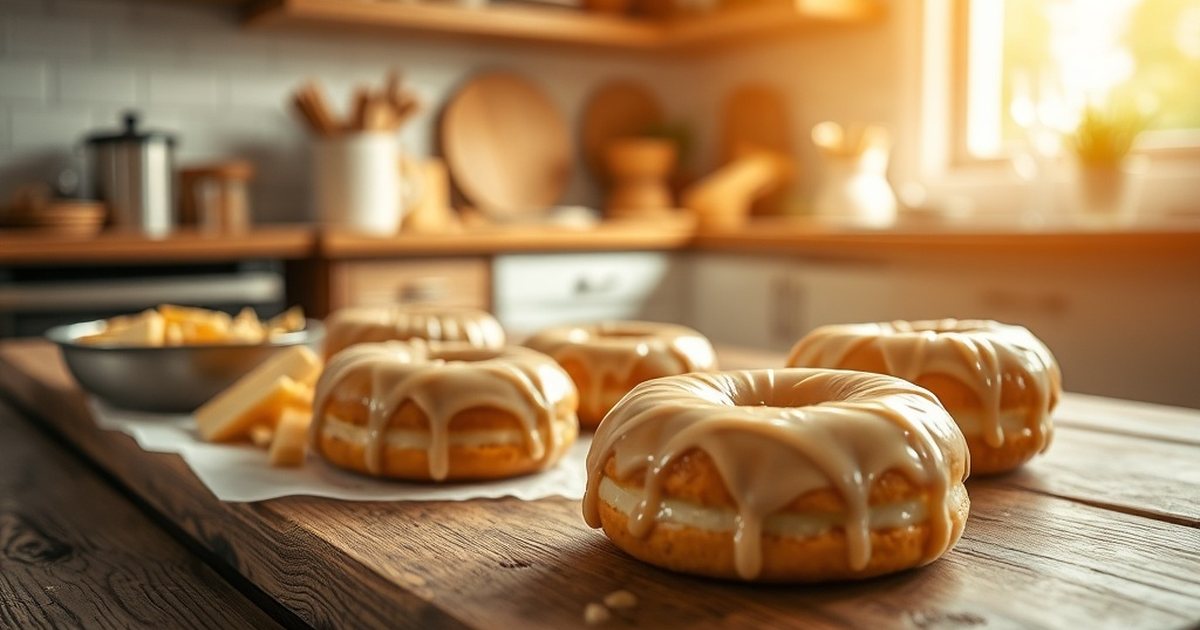
- Maple glaze: Substitute half the milk with real maple syrup and replace the vanilla with 1/2 teaspoon of maple extract for a noticeably more complex, less sweet glaze.
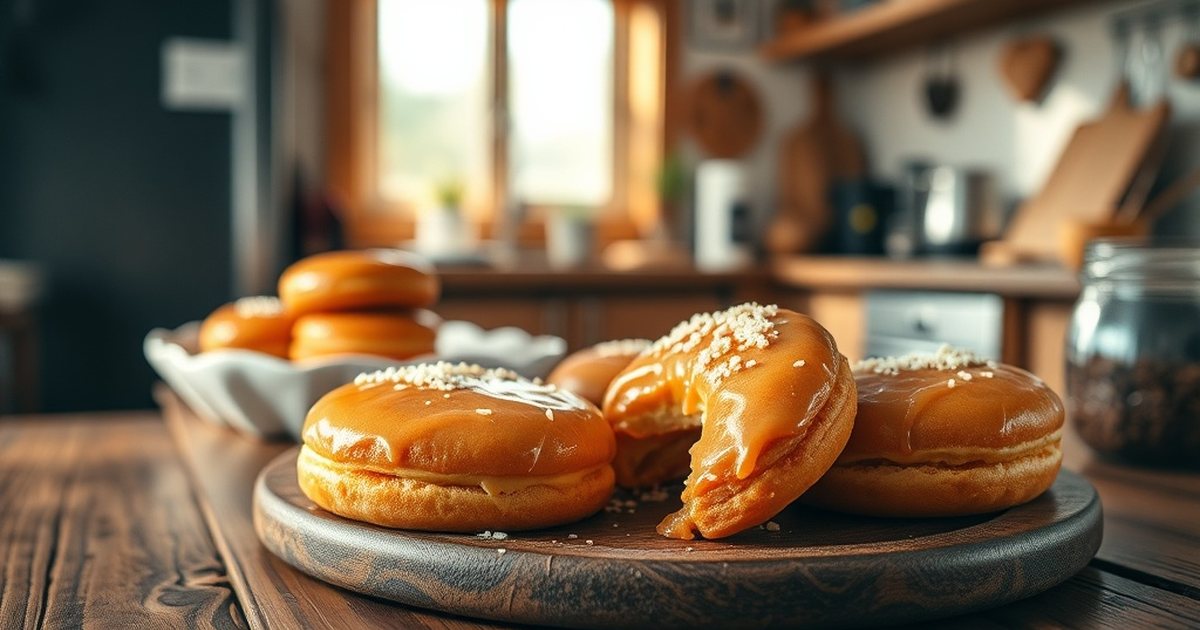
- Cream-filled: Skip punching out center holes and fry whole rounds instead. Once cooled slightly, pipe pastry cream, strawberry jam, or Bavarian cream into the center using a piping bag fitted with a long tip.
Storage & Reheating
Krispy Kreme-style glazed doughnuts are at their best within two hours of glazing — after that the glaze softens and the crumb begins to compress. Store leftovers at room temperature in an airtight container for up to one day; refrigeration stales them quickly and is not recommended. To revive a day-old doughnut, microwave for 10–12 seconds until warmed through and the glaze re-melts slightly. For longer storage, freeze fried but unglazed doughnuts in a single layer, then transfer to a zip bag for up to one month. Thaw at room temperature, warm briefly in a 300°F oven for 5 minutes, and glaze fresh before serving.
What to Serve It With
These doughnuts are a complete experience on their own, but a strong, black drip coffee is the canonical pairing — the bitterness cuts through the sweetness and draws out the yeast character of the dough in a way nothing else quite does. For a weekend brunch, set up a simple glazing station so everyone can dip their own doughnut straight from the fryer. Fresh fruit alongside provides a natural contrast to the richness, and a pot of hot chocolate makes the whole thing feel like an occasion worth repeating.
The Bottom Line
Krispy Kreme’s Glazed Doughnuts is one of those dishes that feels like it should be hard to make and expensive to buy — but at home it’s neither. For about $3.02 in everyday ingredients you get 12 doughnuts, fresh and warm, for roughly 78% less than ordering out. Make it once and it’ll join the short list of recipes you reach for without thinking. Bookmark this one, grab the ingredients, and keep an eye on CopyKitchen for more copycat favorites with the real cost to make them at home.
Frequently Asked Questions
Can I make the dough ahead of time?
Yes — after kneading, place the dough in a greased bowl, cover tightly, and refrigerate for up to 12 hours in place of the first room-temperature rise. Cold slows the yeast dramatically and allows a long, slow fermentation that develops noticeably more flavor. The next morning, remove the dough, let it rest at room temperature for 30 minutes, then roll, cut, and proceed with the second rise as written.
Why are my doughnuts greasy?
Greasiness is almost always caused by oil that was not hot enough when the doughnuts went in. Oil below 340°F allows the dough to absorb fat before a proper exterior crust has time to form. Verify your oil is at 350°F before each batch and give it 2–3 minutes to fully recover between rounds. A thermometer is not optional for this recipe.
Can I bake these instead of frying?
You can bake them in a doughnut pan at 375°F for 10–12 minutes, but the result is a different product entirely. Baked doughnuts lack the thin fried shell and the fat absorption that give Krispy Kreme doughnuts their distinctive texture and richness. They will be more like a soft dinner roll in doughnut shape — fine on their own terms, but not a copycat of the original.
What oil does Krispy Kreme actually use?
Krispy Kreme fries in a blend that includes palm and soybean oil. For home use, any neutral oil with a high smoke point works well: refined coconut oil gives the closest flavor profile, while vegetable oil and canola oil are excellent everyday options. Avoid olive oil and any unrefined oils — they have lower smoke points and their flavor carries into the doughnut.
My glaze is too thick or too thin — how do I fix it?
For glaze that is too thick, add warm milk one teaspoon at a time, whisking after each addition, until it flows off a spoon in a slow, even ribbon. For glaze that is too thin, whisk in powdered sugar a tablespoon at a time. The ideal consistency coats a spoon but does not cling heavily to it. Note that the glaze will thin slightly as it warms from the hot doughnuts, so erring slightly thick is safer than slightly thin.
How do I know when the second rise is done?
A properly proofed doughnut will look visibly larger than when you cut it — nearly doubled — and will jiggle gently when you shake the sheet pan. The poke test works well: press a fingertip lightly into the surface of the dough. A correctly proofed doughnut springs back slowly and leaves a faint indentation that gradually fills in. If the dough springs back immediately and feels tight, it needs more time at room temperature.
Cost figures use US BLS Average Price Data (US city average) and are estimates for comparison; your local grocery prices and Krispy Kreme’s current menu price will vary. As an Amazon Associate we earn from qualifying purchases. CopyKitchen is not affiliated with, endorsed by, or sponsored by Krispy Kreme or any brand mentioned; this is an independent, homemade copycat recipe, and all trademarks are the property of their respective owners.