Affiliate disclosure: As an Amazon Associate we earn from qualifying purchases. CopyKitchen is reader-supported; cost and savings references are general and your local prices will vary.
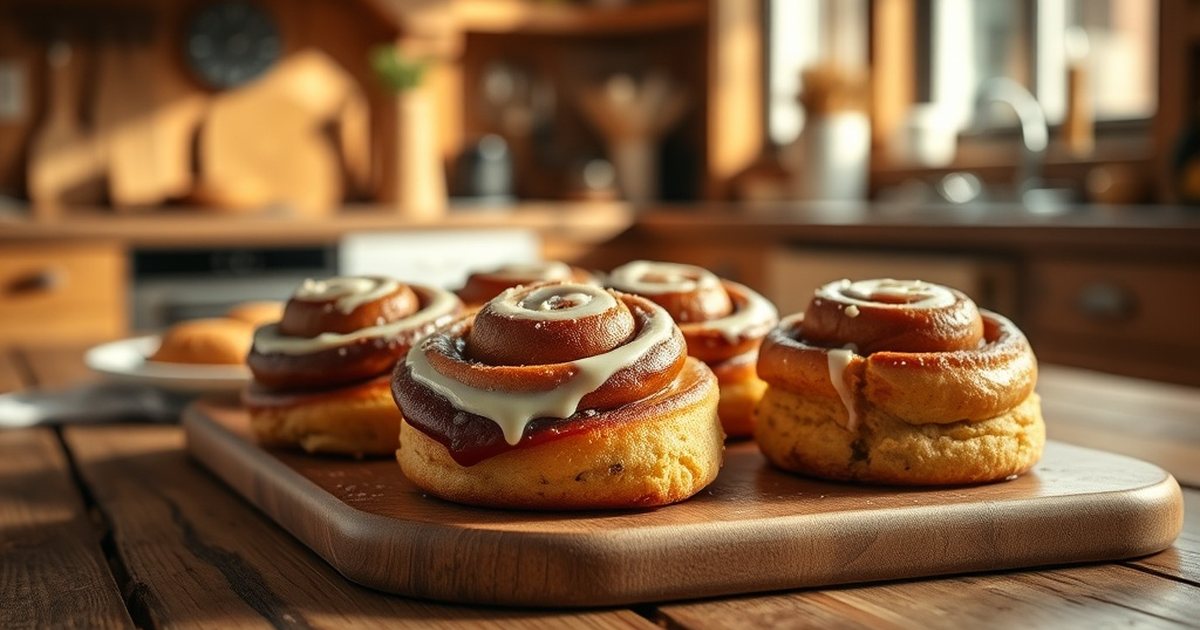
Few smells in the world are as instantly recognizable as a Cinnabon baking in a mall or airport. Those oversized rolls have built a devoted following on the strength of three things: a pillowy, slightly sweet dough, a thick ribbon of cinnamon-brown sugar filling that turns caramelized and gooey in the oven, and a warm cream cheese frosting that melts into every swirl the moment it hits the pan. Once you’ve had one, it becomes a craving that’s genuinely hard to shake.
The good news is that everything behind that iconic roll can be reproduced at home with a handful of pantry staples. This recipe captures the key elements that make Cinnabon distinctive—an enriched yeast dough rich with milk, butter, and eggs; a generous, packed filling that doesn’t hold back on cinnamon; and a silky cream cheese glaze applied while the rolls are still warm so it soaks into the layers rather than sitting on top like a stiff icing. Make a batch on a weekend morning and your kitchen will smell better than any food court.
About Cinnabon’s Cinnamon Rolls
What separates Cinnabon rolls from an ordinary cinnamon roll is the combination of an enriched dough and an unusually generous filling-to-dough ratio. The dough is built more like a soft brioche than a lean bread dough—milk, eggs, butter, and sugar are all incorporated to create a tender crumb that stays moist long after baking. Cinnabon famously uses Makara cinnamon from the Korintje region of Indonesia, a variety that delivers a warmer, more complex flavor than standard grocery store cassia. The quality of your cinnamon is one of the single biggest levers you can pull to close the gap between homemade and the original.
The construction technique matters just as much as the ingredients. The dough is rolled to a large, even rectangle so the filling layer is thick and consistent from edge to edge. Softened butter goes on first and acts as a binder that keeps the brown sugar and cinnamon in place as you roll. The log is then rolled tightly—a loose roll is the most common reason homemade versions lose that signature gooey center—and cut into thick rounds that proof in the pan until puffed and touching. The frosting goes on immediately out of the oven so the residual heat melts it down into the crevices rather than leaving it sitting as a cold cap on top.
Cinnamon Rolls: Restaurant vs. Homemade Cost
| At Cinnabon | Homemade (12 cinnamon rolls) | You Save |
|---|---|---|
| $29.99 | $1.77 | $28.22 (94%) |
Cinnabon price is the approximate cost of a 6-roll classic pack at Cinnabon. Homemade cost is calculated from
US average grocery prices (US BLS Average Price Data, May 2026).
Ingredient cost breakdown
| Ingredient | Amount | Cost |
|---|---|---|
| all-purpose flour | 4.5 cup | $0.68 |
| whole milk, warmed to 110°F | 1 cup | $0.26 |
| granulated sugar | 0.33 cup | $0.15 |
| unsalted butter, divided | 1 cup | $1.59 |
| large eggs, room temperature | 2 each | $0.37 |
| packed dark brown sugar | 1 cup | $0.50 |
| full-fat block cream cheese, softened | 8 oz | — |
| powdered sugar | 1.5 cup | — |
| active dry yeast (1 standard packet) | 2.25 tsp | — |
| ground cinnamon | 2.5 tbsp | — |
| pure vanilla extract | 0.5 tsp | — |
| fine sea salt | 1 tsp | — |
| Total (makes 12 cinnamon rolls) | $3.55 | |
Pantry staples not counted: full-fat block cream cheese, softened, powdered sugar, active dry yeast (1 standard packet), ground cinnamon, pure vanilla extract, fine sea salt (negligible cost).
Nutrition (estimated per serving)
Estimated from listed ingredients using USDA FoodData Central reference values. Actual values vary with brands, portions, and preparation.
How Much Does It Cost to Make Cinnabon’s Cinnamon Rolls at Home?
A full batch makes 12 cinnamon rolls for about $3.55 in ingredients — roughly $0.30 per serving. Ordering the equivalent at Cinnabon runs around $29.99, so making it yourself saves about $28.22 (94%). Those numbers come from current US average grocery prices (US BLS Average Price Data, May 2026), not estimates — the per-ingredient breakdown is in the table above. The savings are this large because you’re buying staple ingredients in bulk instead of paying for a prepared, served dish, and a single batch stretches across many servings.
Why Make It at Home?
A 6-pack of Cinnabon classic rolls runs close to $30, which puts a dozen at roughly $60 before you’ve even thought about a coffee to go with them. Making the same quantity at home costs a fraction of that and gives you full control over every element: you can use a high-quality Indonesian or Vietnamese cinnamon for a noticeably deeper spice note, dial the frosting sweetness up or down to taste, and pull the rolls from the oven at exactly the moment they’re still slightly gooey in the center rather than fully baked through. There’s also the straightforward pleasure of serving a pan of warm, fresh cinnamon rolls that came out of your own oven.
Ingredients for Copycat Cinnabon Cinnamon Rolls
Here’s the full ingredients list you’ll need to make Cinnabon Cinnamon Rolls at home:
- 4.5 cup all-purpose flour
- 1 cup whole milk, warmed to 110°F
- 0.33 cup granulated sugar
- 1 cup unsalted butter, divided
- 2 each large eggs, room temperature
- 1 cup packed dark brown sugar
- 8 oz full-fat block cream cheese, softened
- 1.5 cup powdered sugar
- 2.25 tsp active dry yeast (1 standard packet)
- 2.5 tbsp ground cinnamon
- 0.5 tsp pure vanilla extract
- 1 tsp fine sea salt
A few ingredient notes:
- Whole milk produces a noticeably richer, more tender dough than reduced-fat alternatives. The fat content helps create the soft, pillowy crumb that defines these rolls.
- Use full-fat block cream cheese for the frosting, not whipped or spreadable versions. Block cream cheese holds more structure and gives the frosting a proper creamy density. Let it come fully to room temperature—at least an hour—before beating, or you’ll end up with lumps that don’t beat out.
- Standard grocery store cinnamon works, but the single best upgrade you can make to this recipe is sourcing Saigon (Vietnamese) or Korintje (Indonesian) cinnamon from a spice shop. The flavor is warmer, more layered, and significantly closer to what Cinnabon uses than the common cassia variety.
🛒 Shop the Ingredients & Tools
- King Arthur all purpose flour
- Granulated white sugar
- Stainless steel mixing bowls
- Half sheet baking pan
As an Amazon Associate we earn from qualifying purchases.

How to Make Cinnabon Cinnamon Rolls at Home
Prep: 30 min · Cook: 25 min · Makes: 12 cinnamon rolls
- 1. Activate the yeast: Warm the milk to 110°F—it should feel comfortably warm but not hot on your wrist. Stir in 1 tablespoon of the granulated sugar and the yeast. Let sit for 5–10 minutes until the mixture is foamy and smells yeasty. If it doesn’t foam, the yeast is dead or the milk was too hot; start over.
- 2. Make the dough: In the bowl of a stand mixer (or a large bowl), whisk together the remaining granulated sugar, 1/3 cup melted butter, eggs, and salt. Pour in the yeast mixture and stir to combine. Add the flour one cup at a time, mixing with the dough hook on medium speed. Knead for 7–8 minutes until the dough is smooth, slightly tacky, and springs back when poked. It should clear the sides of the bowl but may still stick slightly to the bottom—do not add more flour to compensate.
- 3. First rise: Transfer the dough to a lightly oiled bowl and turn to coat. Cover tightly with plastic wrap and set in a warm, draft-free spot for 1 to 1.5 hours until doubled in size.
- 4. Make the filling: Stir the brown sugar and cinnamon together in a small bowl until fully combined. Let 1/3 cup of butter soften to a spreadable, room-temperature consistency (not melted).
- 5. Shape the rolls: Punch the risen dough down and turn it onto a lightly floured surface. Roll into a 16×12-inch rectangle, keeping the thickness even. Spread the softened 1/3 cup butter across the entire surface, leaving a bare 1/2-inch strip along one long edge. Sprinkle the cinnamon-brown sugar mixture evenly over the butter and press it in firmly. Starting from the buttered long edge, roll the dough tightly into a log. Pinch the seam closed. Trim and discard the uneven ends, then cut into 12 equal rounds using a sharp knife or unflavored dental floss.
- 6. Second rise: Arrange the rolls cut-side up in a greased 9×13-inch baking pan, leaving a small gap between each. Cover loosely and let rise for 30–45 minutes until the rolls are puffed and their edges are touching. Preheat the oven to 350°F while they proof.
- 7. Bake: Bake for 22–26 minutes until the tops are golden brown. Pull them when the very center rolls still look barely set—they firm up as they cool and overbaking is the primary reason homemade versions turn dry. A digital thermometer reading 190°F in the center is a reliable target.
- 8. Make the frosting and finish: Beat the softened cream cheese and remaining 1/4 cup softened butter together on medium-high speed until completely fluffy, about 2 minutes. Add the powdered sugar, vanilla, and a pinch of salt and beat until smooth. Spread the frosting generously over the rolls while they’re still warm so it melts into the layers. Serve within 30 minutes for peak texture.

Tips for the Best Results
- Roll the dough log tightly. This is the single most important shaping step—a loose roll means the layers separate in the oven, the filling spills out, and you lose the gooey center that defines a great cinnamon roll.
- Use dental floss to cut the rolls cleanly. Slide a length of unflavored floss under the log, cross the ends over the top, and pull. It cuts without compressing the dough the way a knife does and produces perfectly round slices.
- Don’t rush the second rise. The rolls need to fully puff and touch before going into the oven. Under-proofed rolls bake up dense and bready instead of light and soft.
- Frost them warm, not hot. Give the rolls 5 minutes out of the oven before frosting. Too fresh and the frosting completely liquifies and pools at the bottom of the pan; slightly cooled and it melts to just the right glossy, sink-in consistency.
Common Mistakes to Avoid
- Milk that’s too hot kills the yeast before it can do anything. Temperatures above 120°F are the danger zone. When in doubt, use a thermometer—110°F is the safe target.
- Adding too much flour. The dough should be soft and slightly tacky, not stiff and dry. Stiff dough bakes into a dense, bready roll. Resist the urge to keep flouring until it stops sticking to your hands.
- Overbaking. The rolls should look just barely golden on top and still slightly soft in the very center when you pull them. Waiting until they look fully done means they’re already overdone—they continue to cook on the residual heat of the pan.
- Skimping on filling. Cinnabon rolls are defined by an aggressively thick filling. Use the full amount, spread it to the edges, and press it into the butter so it adheres rather than falling out when you roll.
Variations to Try
- Pecan Caramel: Pour 1/2 cup of warm caramel sauce into the bottom of the greased pan before adding the rolls, and stir 1/2 cup of chopped pecans into the cinnamon-brown sugar filling. Invert onto a platter after a 5-minute rest for a sticky bun effect.
- Apple Spice: Fold 1 cup of finely diced peeled apple and a pinch each of nutmeg and cardamom into the cinnamon-brown sugar filling before spreading. The apple softens into the filling as the rolls bake for a fall-inspired variation.
- Orange Cream: Replace the vanilla extract in the frosting with 1 tablespoon of fresh orange zest and 2 teaspoons of fresh orange juice. The citrus cuts through the richness of the cream cheese and pairs especially well with the warm cinnamon.
Storage & Reheating
Store leftover rolls tightly covered at room temperature for up to 2 days, or refrigerate for up to 5 days. To reheat, microwave individual rolls for 20–30 seconds with a damp paper towel draped over the top—the steam restores moisture and brings back the soft texture. Unfrosted baked rolls freeze well for up to 2 months; wrap individually in plastic wrap, store in a zip bag, and thaw overnight in the refrigerator before warming in a 300°F oven for 10 minutes. Add fresh frosting after reheating.
What to Serve It With
These rolls are fully self-contained as a breakfast or brunch centerpiece, but a strong cup of coffee or a well-made latte is the natural companion—the bitterness offsets the sweetness in a way that makes both taste better. For a larger spread, serve alongside scrambled eggs and bacon to give the table something savory to balance the richness of the rolls. A cold glass of whole milk or a simple fruit salad of sliced strawberries rounds things out without adding more sugar to the plate.
The Bottom Line
Cinnabon’s Cinnamon Rolls is one of those dishes that feels like it should be hard to make and expensive to buy — but at home it’s neither. For about $3.55 in everyday ingredients you get 12 cinnamon rolls, fresh and warm, for roughly 94% less than ordering out. Make it once and it’ll join the short list of recipes you reach for without thinking. Bookmark this one, grab the ingredients, and keep an eye on CopyKitchen for more copycat favorites with the real cost to make them at home.
Frequently Asked Questions
Can I prepare these rolls the night before?
Yes, and it’s one of the best ways to approach them. After shaping and placing the rolls in the pan, skip the second rise, cover the pan tightly with plastic wrap, and refrigerate overnight. In the morning, pull the pan out and let the rolls sit at room temperature for 45–60 minutes to finish proofing before baking as directed. The cold fermentation actually develops slightly more flavor in the dough.
Why didn’t my dough rise?
The most common causes are expired yeast or milk that was too hot and killed the yeast before it could activate. Always check the expiration date on your yeast and take the milk temperature seriously—110°F is the target. The dough also needs a genuinely warm environment to rise; a cold kitchen will slow things dramatically. Placing the covered bowl inside an oven with just the light on (no heat) creates a reliable proofing environment.
What kind of cinnamon does Cinnabon actually use?
Cinnabon sources Makara cinnamon from the Korintje growing region of Indonesia, a variety with a fuller, warmer, less sharp flavor than standard cassia cinnamon. The closest widely available substitute is Saigon cinnamon (Vietnamese cinnamon), which you can find at most spice shops or online. It’s a noticeable upgrade over the standard grocery store option and one of the most direct ways to close the flavor gap between homemade and the original.
Can I freeze cinnamon rolls?
Yes. Baked rolls freeze well for up to 2 months. Wrap them individually in plastic wrap and store in a zip-top freezer bag. Thaw at room temperature for a couple of hours or overnight in the refrigerator, then rewarm in a 300°F oven for 10–12 minutes before adding fresh frosting. You can also freeze unbaked shaped rolls before the second rise—thaw them overnight in the refrigerator, let them proof at room temperature for about an hour, then bake from there.
Why are my rolls dry instead of gooey?
Dryness almost always comes down to overbaking. Pull the rolls when the centers still look barely set—they will continue to cook on the residual heat of the pan. Beyond baking time, make sure you’re using whole milk and the full butter quantity in the dough; reducing fat produces a noticeably drier crumb. Frosting the rolls while still warm rather than fully cooled also helps the glaze soak into the layers and keep each bite moist.
How do I get the frosting completely smooth with no lumps?
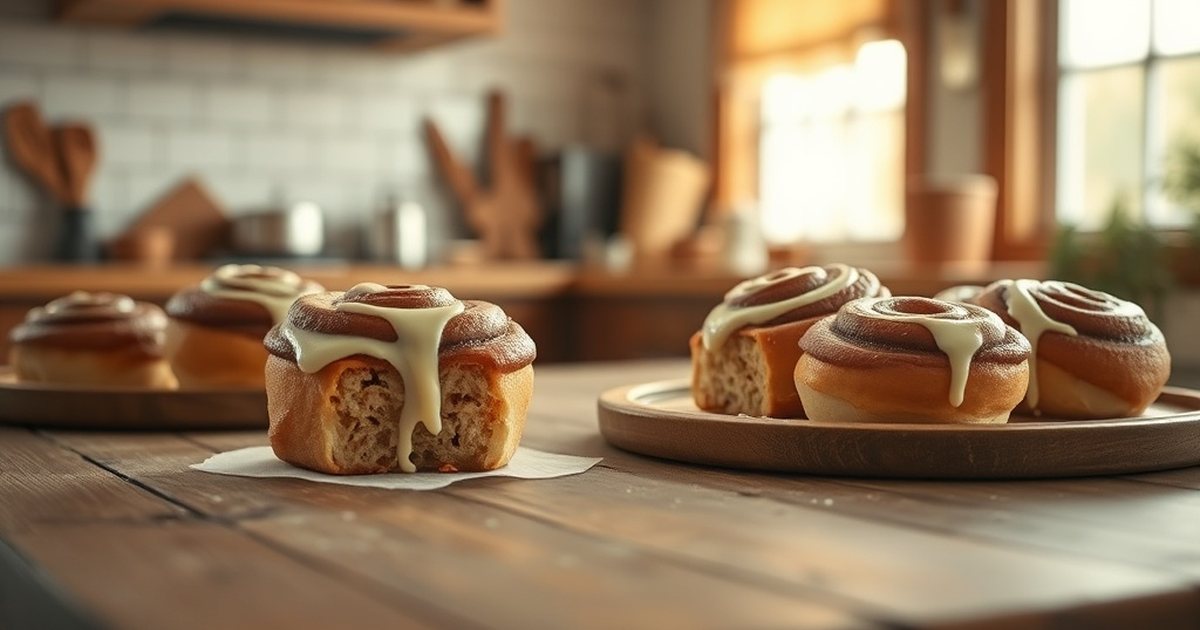
The key is fully softened cream cheese. It needs to sit at room temperature for at least an hour—ideally longer—before you beat it. If it’s even slightly cold from the refrigerator, you’ll get small lumps that don’t beat out no matter how long you run the mixer. Beat the cream cheese and butter together first until completely smooth and fluffy before adding the powdered sugar, and sift the powdered sugar beforehand to eliminate any graininess in the finished frosting.
Cost figures use US BLS Average Price Data (US city average) and are estimates for comparison; your local grocery prices and Cinnabon’s current menu price will vary. As an Amazon Associate we earn from qualifying purchases. CopyKitchen is not affiliated with, endorsed by, or sponsored by Cinnabon or any brand mentioned; this is an independent, homemade copycat recipe, and all trademarks are the property of their respective owners.