Affiliate disclosure: As an Amazon Associate we earn from qualifying purchases. CopyKitchen is reader-supported; cost and savings references are general and your local prices will vary.
Texas Roadhouse green beans are one of those sides that quietly steal the show. They arrive soft, savory, and deeply flavored with bacon, and they taste nothing like the bland canned beans you might expect. The secret is a long, slow simmer that transforms simple ingredients into something that tastes like it came out of a Southern grandmother’s kitchen.
This copycat recipe nails that same comfort-food result at a fraction of the cost. A single order at the restaurant runs close to four dollars, but this batch feeds four for well under two dollars in ingredients. It comes together in under an hour with pantry staples most households already have, making it the easiest side dish upgrade you can add to a weeknight dinner.
About Texas Roadhouse’s Green Beans
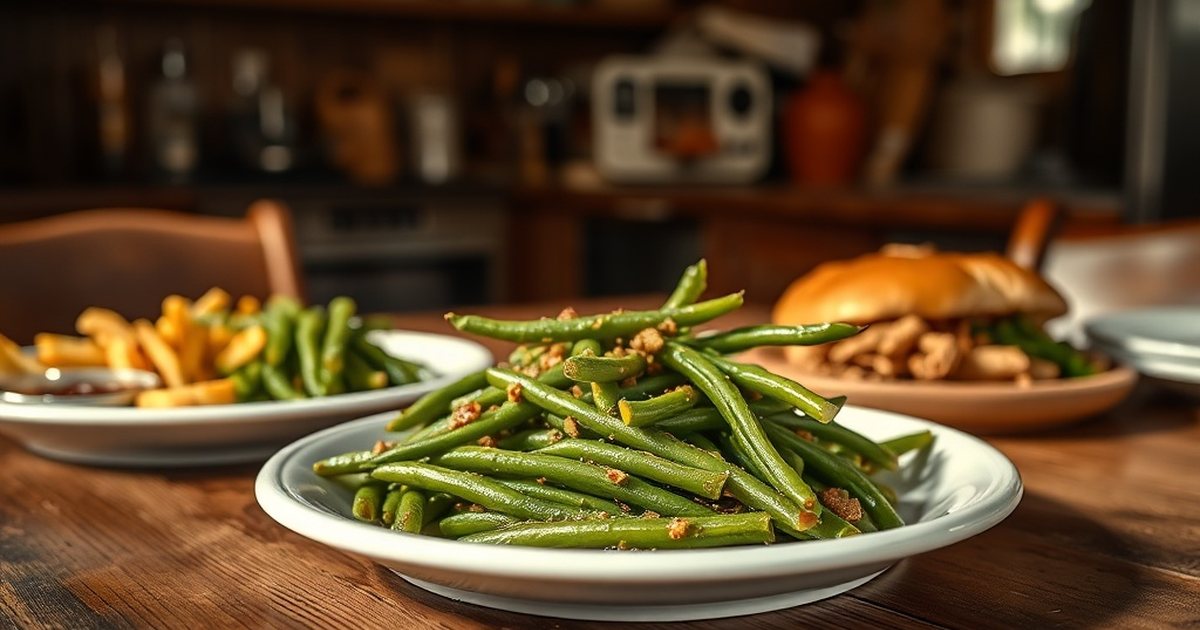
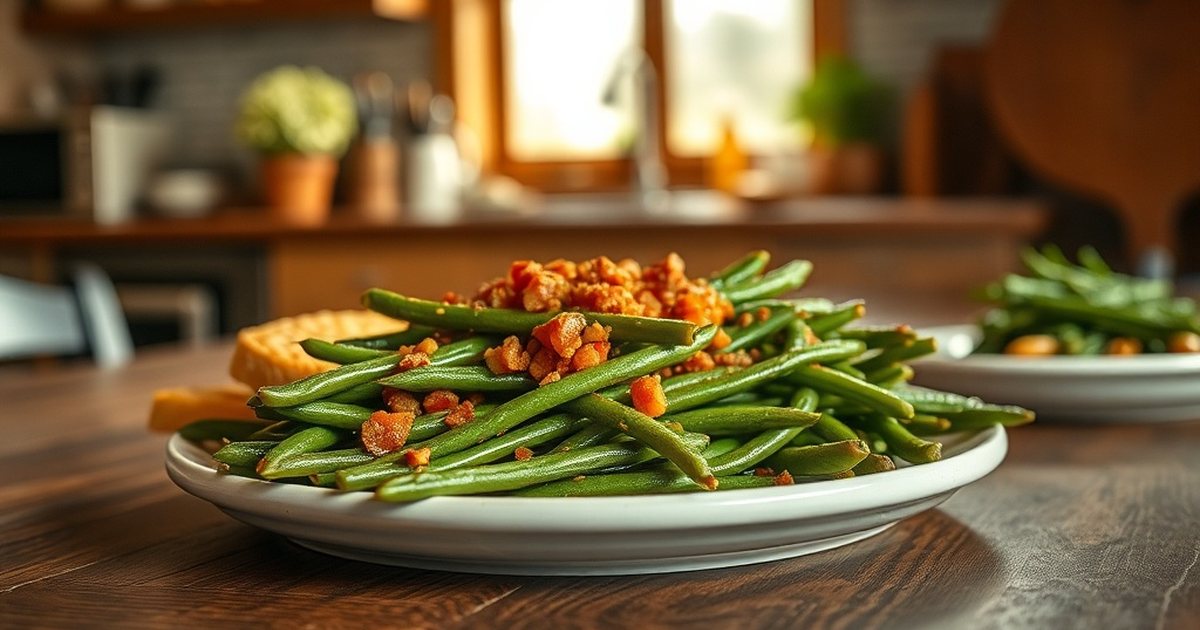
The defining characteristic of Texas Roadhouse green beans is their texture and fat content. These are not blanched, not roasted, and definitely not crunchy. They are Southern-style beans: slow-cooked until tender and yielding, saturated with rendered bacon fat, and carrying a subtle sweetness that balances the salt and smoke. Canned cut green beans are the right call here — their softer starting texture absorbs the cooking liquid better than fresh or frozen.
The technique is straightforward but depends on patience. Bacon is rendered first to build a flavorful fat base, onion and garlic bloom in those drippings, and then the beans and broth go in together for an extended simmer. The broth reduces around the beans rather than becoming a standing liquid, concentrating the savory notes. A finishing pat of butter added off heat rounds everything out and gives the beans a faint gloss.
Green Beans: Restaurant vs. Homemade Cost
| At Texas Roadhouse | Homemade (4 servings) | You Save |
|---|---|---|
| $3.99 | $1.05 | $2.94 (74%) |
Texas Roadhouse price is the approximate cost of a comparable side order. Homemade cost is calculated from US average grocery prices (US BLS Average Price Data, May 2026).
Ingredient cost breakdown
| Ingredient | Amount | Cost |
|---|---|---|
| cans cut green beans (14.5 oz each), drained | 2 each | — |
| slices bacon, chopped into small pieces | 4 each | $0.95 |
| yellow onion, finely diced | 0.25 cup | — |
| unsalted butter | 1 tbsp | $0.10 |
| garlic cloves, minced | 2 clove | — |
| chicken broth or stock | 0.5 cup | — |
| salt and black pepper, to taste | 0.5 tsp | — |
| granulated sugar | 0.5 tsp | $0.00 |
| Total (makes 4 servings) | $1.05 | |
Pantry staples not counted: cans cut green beans (14.5 oz each), drained, yellow onion, finely diced, garlic cloves, minced, chicken broth or stock, salt and black pepper, to taste (negligible cost).
Nutrition (estimated per serving)
Estimated from listed ingredients using USDA FoodData Central reference values. Actual values vary with brands, portions, and preparation.
How Much Does It Cost to Make Texas Roadhouse’s Green Beans at Home?
A full batch makes 4 servings for about $1.05 in ingredients — roughly $0.26 per serving. Ordering the equivalent at Texas Roadhouse runs around $3.99, so making it yourself saves about $2.94 (74%). Those numbers come from current US average grocery prices (US BLS Average Price Data, May 2026), not estimates — the per-ingredient breakdown is in the table above. The savings are this large because you’re buying staple ingredients in bulk instead of paying for a prepared, served dish, and a single batch stretches across many servings.
Why Make It at Home?
Making these at home means you control the bacon-to-bean ratio, and the honest answer is you can go heavier than the restaurant does. You also skip the wait, the tip, and the drive, and you end up with a batch large enough to serve alongside a full meal rather than a small scoop on the side of a plate. The ingredient list is short enough that this barely counts as cooking — it is mostly just tending a pan for half an hour.
Ingredients for Copycat Texas Roadhouse Green Beans
Here’s the full ingredients list you’ll need to make Texas Roadhouse Green Beans at home:
- 2 each cans cut green beans (14.5 oz each), drained
- 4 each slices bacon, chopped into small pieces
- 0.25 cup yellow onion, finely diced
- 1 tbsp unsalted butter
- 2 clove garlic cloves, minced
- 0.5 cup chicken broth or stock
- 0.5 tsp salt and black pepper, to taste
- 0.5 tsp granulated sugar
A few ingredient notes:
- Use standard cut green beans in 14.5 oz cans rather than french-style or whole. The cut size matches what the restaurant serves and holds up better during the long simmer without turning mushy.
- Regular-cut grocery store bacon works perfectly here. Thick-cut bacon produces larger pieces and more rendered fat, which is not a bad thing, but it takes longer to crisp and the flavor difference is minor.
- Low-sodium chicken broth lets you manage the salt level yourself since canned beans already carry significant sodium. Taste before adding any extra salt at the end.
🛒 Shop the Ingredients & Tools
As an Amazon Associate we earn from qualifying purchases.


How to Make Texas Roadhouse Green Beans at Home
Prep: 10 min · Cook: 35 min · Makes: 4 servings
- 1. Place a medium saucepan or deep skillet over medium heat. Add the chopped bacon and cook, stirring occasionally, until the bacon is fully rendered and crispy, about 8 to 10 minutes. Remove the bacon with a slotted spoon and set aside on a paper towel, leaving all the drippings in the pan.
- 2. Add the diced onion to the bacon drippings and cook over medium heat until softened and translucent, about 4 minutes. Stir frequently and scrape up any browned bits from the bottom of the pan.
- 3. Add the minced garlic and cook for 30 seconds, stirring constantly, until fragrant. Do not let the garlic brown.
- 4. Drain both cans of green beans and add them to the pan. Pour in the chicken broth and stir to combine everything.
- 5. Add the sugar, a pinch of salt, and several grinds of black pepper. Stir, taste the liquid, and adjust seasoning if needed.
- 6. Reduce the heat to medium-low and simmer uncovered for 20 to 25 minutes, stirring occasionally. The broth should reduce significantly and the beans should become very tender and absorb the savory cooking liquid.
- 7. Remove the pan from the heat and stir in the butter until it melts and coats the beans. Return the reserved bacon pieces and stir to distribute.
- 8. Taste one final time for seasoning and serve immediately.
Tips for the Best Results
- Do not drain the rendered bacon fat before adding the onion. That fat is where most of the flavor lives and is exactly what makes the beans taste like the restaurant version.
- If the broth reduces too fast before the beans are fully tender, add a splash of water or extra broth and keep simmering. The beans should be soft, not firm.
- Add the butter off heat so it emulsifies into the liquid rather than separating. This gives the beans a subtle richness without making them greasy.
- For deeper flavor, let the beans sit covered for five minutes after cooking before serving. They continue absorbing the liquid and the taste improves.
Common Mistakes to Avoid
- Using fresh green beans without adjusting the cook time. Fresh beans need significantly longer or a quick blanch first before joining the braise, otherwise they stay too firm.
- Pouring off the bacon drippings. This is the most common mistake and the one that leads to bland beans. The drippings are the base of the entire dish.
- Simmering at too high a heat and boiling off all the liquid in the first ten minutes. Keep it at a gentle simmer — bubbling lightly around the edges — so the beans braise rather than steam.
- Skipping the sugar. It seems counterintuitive but a small amount of sugar balances the saltiness from the bacon and canned beans and matches the slightly sweet profile of the restaurant version.
Variations to Try
- Add a pinch of red pepper flakes with the garlic for a mildly spicy version that pairs especially well with grilled chicken.
- Stir in a tablespoon of apple cider vinegar at the end for a tangy, Southern-style pot-likker finish that brightens the richness of the bacon fat.
- Swap the chicken broth for the liquid from the canned beans plus a splash of water for a more traditional Southern approach that leans into the natural bean flavor.
Storage & Reheating
Leftover green beans keep well in an airtight container in the refrigerator for up to four days. The flavor actually improves overnight as the beans continue absorbing the cooking liquid. Reheat gently in a small saucepan over low heat with a tablespoon of water or broth to loosen them, or microwave covered in 60-second intervals, stirring between each. Avoid high heat when reheating as it can cause the beans to break down further and become mushy.
What to Serve It With
These beans are built to accompany the same kinds of meals Texas Roadhouse serves alongside them: grilled steaks, smothered chicken, pulled pork, or BBQ ribs. They also work well next to mashed potatoes, cornbread, or macaroni and cheese for a full Southern comfort spread. For a lighter pairing, serve them with roasted chicken thighs and a simple garden salad.
The Bottom Line
Texas Roadhouse’s Green Beans is one of those dishes that feels like it should be hard to make and expensive to buy — but at home it’s neither. For about $1.05 in everyday ingredients you get 4 servings, fresh and warm, for roughly 74% less than ordering out. Make it once and it’ll join the short list of recipes you reach for without thinking. Bookmark this one, grab the ingredients, and keep an eye on CopyKitchen for more copycat favorites with the real cost to make them at home.
Frequently Asked Questions
Why do Texas Roadhouse green beans taste so different from regular canned green beans?
The key difference is the extended cooking process with rendered bacon fat and broth. Canned beans are already fully cooked, but simmering them a second time in a flavorful liquid lets them absorb savory, smoky notes they would never develop on their own. The bacon drippings in particular carry compounds that plain water or oil cannot replicate.
Can I use fresh or frozen green beans instead of canned?
Yes, but with adjustments. Frozen green beans should be thawed and patted dry before adding — they will need a few extra minutes of simmering. Fresh green beans need either blanching first or a considerably longer braise of 35 to 45 minutes to reach the soft, fully tender texture the recipe targets. The canned version is closest to the original.
How do I keep the beans from getting too mushy?
The main lever is simmer time. Check the beans at 15 minutes and again at 20 minutes. Once they yield easily when pressed with a spoon but still hold their shape, they are done. Pulling them a couple minutes early and letting them rest covered is safer than overshooting the cook time.
Is there a way to make this vegetarian?
Substitute the bacon with two tablespoons of olive oil or butter for the fat base, use vegetable broth instead of chicken broth, and add half a teaspoon of smoked paprika to approximate the smoky depth bacon provides. The result is less complex but still very good and significantly closer to the original than plain steamed beans.
Can I make these ahead of time for a dinner party?
Yes, and they actually benefit from it. Make the beans up to two days in advance, cool them completely, and refrigerate. The overnight rest deepens the flavor as the beans continue absorbing the cooking liquid. Reheat gently over low heat on the stovetop, adding a small splash of broth if needed, and stir in a fresh pat of butter right before serving.
Why add sugar to savory green beans?
Texas Roadhouse green beans have a subtle sweetness that balances the salt and smoke from the bacon and canned bean liquid. A small amount of sugar — half a teaspoon for a four-serving batch — is barely perceptible on its own but rounds out the overall flavor and prevents the dish from tasting purely salty. This is a common technique in Southern vegetable cooking and is what separates a dish that tastes familiar from one that tastes flat.
Cost figures use US BLS Average Price Data (US city average) and are estimates for comparison; your local grocery prices and Texas Roadhouse’s current menu price will vary. As an Amazon Associate we earn from qualifying purchases. CopyKitchen is not affiliated with, endorsed by, or sponsored by Texas Roadhouse or any brand mentioned; this is an independent, homemade copycat recipe, and all trademarks are the property of their respective owners.