Affiliate disclosure: As an Amazon Associate we earn from qualifying purchases. CopyKitchen is reader-supported; cost and savings references are general and your local prices will vary.
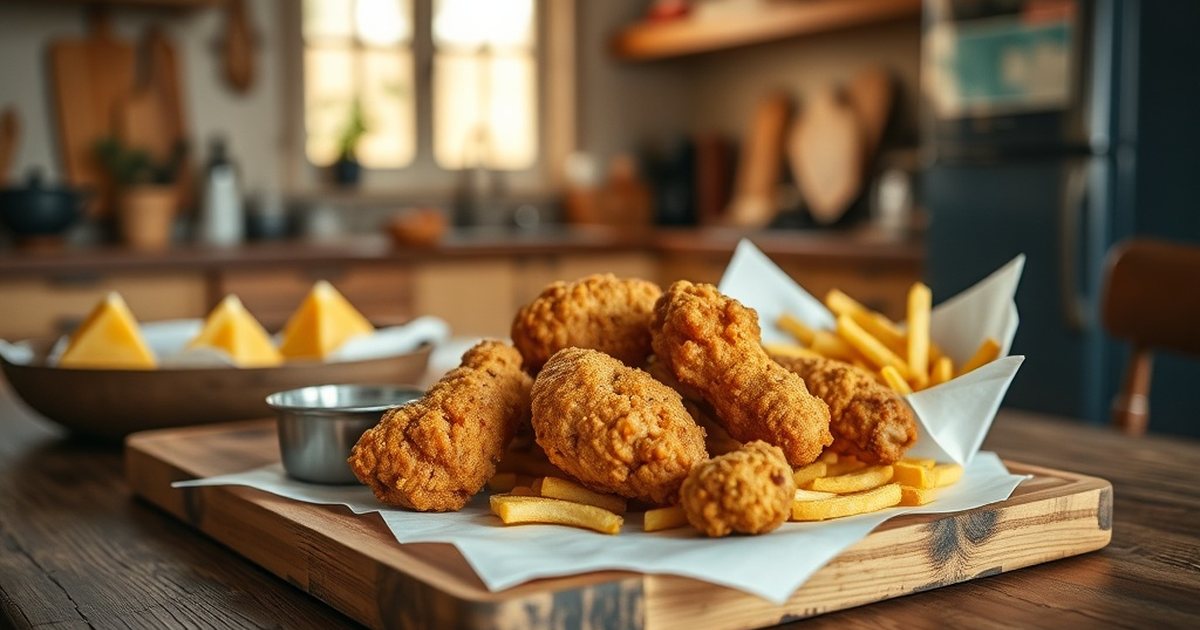
Chick-fil-A chicken nuggets have earned a devoted following for good reason: each piece delivers a tender, juicy interior and a thin, golden shell that stays crispy even as it cools. They taste nothing like the processed nuggets at other chains because they are made from real whole chicken breast cut by hand, marinated in dill pickle brine, coated in a lightly seasoned flour that includes powdered sugar, and fried in peanut oil. Those are deliberate choices, and every one of them matters.
This copycat recipe replicates all of them at home. You will marinate bite-size chicken pieces in pickle juice, dip them in a seasoned milk-and-egg wash, press them into spiced flour, and fry them until deeply golden. The result is remarkably close to the real thing — and because you control the oil freshness, the chicken quality, and the portion size, it often comes out better than the drive-through version.
About Chick-fil-A’s Chicken Nuggets
What distinguishes Chick-fil-A nuggets from the broader category is restraint. The breading is thin and delicate rather than thick or doughy. The seasoning is subtle enough to let the chicken itself come through, and a small amount of powdered sugar in the dredge encourages even browning at frying temperature without making the finished piece taste sweet. The chicken is cut from whole breast muscle — not formed or reformed — so each nugget has a satisfying, meaty chew instead of the uniform, pasty texture of processed varieties.
The pickle juice marinade is the signature technique and the single most important step. Dill pickle brine is mildly acidic and well-salted, which loosens the protein structure of the chicken without breaking it down the way a citrus marinade would. After 30 to 60 minutes in the brine, the chicken absorbs just enough flavor to taste uniquely bright and savory — not pickle-forward at all, but with a faint tang that keeps every bite from tasting flat. A 350°F fry sets the coating quickly and keeps it from absorbing excess oil.
Chicken Nuggets: Restaurant vs. Homemade Cost
| At Chick-fil-A | Homemade (24 nuggets) | You Save |
|---|---|---|
| $6.49 | $5.15 | $1.34 (21%) |
Chick-fil-A price is the approximate cost of a 12-count nuggets order. Homemade cost is calculated from US average grocery prices (US BLS Average Price Data, May 2026).
Ingredient cost breakdown
| Ingredient | Amount | Cost |
|---|---|---|
| boneless skinless chicken breasts | 2 lb | $8.34 |
| dill pickle juice | 1 cup | — |
| whole milk | 1 cup | $0.26 |
| large egg | 1 each | $0.18 |
| all-purpose flour | 1.5 cup | $0.23 |
| powdered sugar | 2 tbsp | $0.06 |
| peanut oil (or neutral vegetable oil), for frying | 2 cup | $1.23 |
| kosher salt | 1.5 tsp | — |
| paprika | 1 tsp | — |
| garlic powder | 0.5 tsp | — |
| onion powder | 0.5 tsp | — |
| black pepper | 0.5 tsp | — |
| Total (makes 24 nuggets) | $10.30 | |
Pantry staples not counted: dill pickle juice, kosher salt, paprika, garlic powder, onion powder, black pepper (negligible cost).
Nutrition (estimated per serving)
Estimated from listed ingredients using USDA FoodData Central reference values. Actual values vary with brands, portions, and preparation.
How Much Does It Cost to Make Chick-fil-A’s Chicken Nuggets at Home?
A full batch makes 24 nuggets for about $10.30 in ingredients — roughly $0.43 per serving. Ordering the equivalent at Chick-fil-A runs around $6.49, so making it yourself saves about $1.34 (21%). Those numbers come from current US average grocery prices (US BLS Average Price Data, May 2026), not estimates — the per-ingredient breakdown is in the table above. The savings are this large because you’re buying staple ingredients in bulk instead of paying for a prepared, served dish, and a single batch stretches across many servings.
Why Make It at Home?
A 12-count order at Chick-fil-A costs around $6.49 before tax, and that adds up fast when you are feeding more than one person. Making nuggets at home with two pounds of chicken breast yields about 24 pieces for significantly less — and you get to control every variable: the oil quality, the freshness of the chicken, the seasoning level, and exactly how hot they hit the table. No drive-through window can give you nuggets straight out of the fryer, and that alone makes the extra effort worthwhile.
Ingredients for Copycat Chick-fil-A Chicken Nuggets
Here’s the full ingredients list you’ll need to make Chick-fil-A Chicken Nuggets at home:
- 2 lb boneless skinless chicken breasts
- 1 cup dill pickle juice
- 1 cup whole milk
- 1 each large egg
- 1.5 cup all-purpose flour
- 2 tbsp powdered sugar
- 2 cup peanut oil (or neutral vegetable oil), for frying
- 1.5 tsp kosher salt
- 1 tsp paprika
- 0.5 tsp garlic powder
- 0.5 tsp onion powder
- 0.5 tsp black pepper
A few ingredient notes:
- Pickle juice is the marinade and it is not optional. The brine from any jar of dill pickles — Vlasic, Claussen, or a store brand — works perfectly. If you already keep pickles in the fridge, this costs you nothing extra.
- Powdered sugar in the flour dredge sounds like a mistake but it is the detail responsible for the coating’s delicate crispness and even golden color. The quantity is small enough that the finished nuggets are entirely savory — the sugar is there for browning chemistry, not sweetness.
- Peanut oil is Chick-fil-A’s actual frying medium and it contributes a clean, mildly nutty finish. If you have a nut allergy, refined sunflower oil or a neutral vegetable oil fries at the same temperature and produces nearly identical results.
🛒 Shop the Ingredients & Tools
- King Arthur all purpose flour
- Granulated white sugar
- Stainless steel mixing bowls
- Half sheet baking pan
As an Amazon Associate we earn from qualifying purchases.

How to Make Chick-fil-A Chicken Nuggets at Home
Prep: 45 min · Cook: 20 min · Makes: 24 nuggets
- 1. Cut chicken breasts into 1- to 1½-inch pieces, trimming away any visible fat or tough tendon. Aim for roughly uniform size so every piece cooks through at the same rate.
- 2. Place the chicken pieces in a zip-top bag or bowl, pour the pickle juice over them, seal, and refrigerate for 30 minutes minimum and up to 2 hours. Do not marinate beyond 2 hours or the texture can become soft and mushy.
- 3. Remove marinated chicken from the refrigerator 10 minutes before frying and let it approach room temperature. In a shallow bowl, whisk together the milk and egg until smooth. In a second shallow bowl, whisk together the flour, powdered sugar, salt, paprika, garlic powder, onion powder, and black pepper.
- 4. Pour about 2 inches of peanut oil into a heavy-bottomed pot or Dutch oven. Heat over medium-high heat until the oil reaches 350°F. Use a thermometer — temperature consistency is the most important variable in producing crispy, non-greasy nuggets.
- 5. Working in batches, lift chicken pieces from the brine and shake off the excess. Dip each piece into the milk-egg mixture, let the excess drip off, then transfer immediately to the seasoned flour. Press gently on all sides to ensure even coating.
- 6. Lower 6 to 8 coated nuggets carefully into the hot oil. Do not crowd the pot or the temperature will drop and the nuggets will steam instead of fry. Cook for 3 to 4 minutes, turning once halfway through, until the exterior is deep golden and the internal temperature reaches 165°F.
- 7. Transfer finished nuggets to a wire rack set over a baking sheet — not paper towels. The rack allows air to circulate under each piece and keeps the crust from softening. Allow the oil to return to 350°F before starting the next batch.
- 8. Season lightly with a pinch of salt immediately after frying while the coating is still hot. Serve right away with your choice of dipping sauce.
Tips for the Best Results
- Let dredged nuggets rest on a wire rack for 2 to 3 minutes before lowering them into the oil — this brief rest helps the flour coating adhere and produces a more even, intact crust.
- Use one dedicated hand for the wet dip and a separate hand for the dry dredge. Keeping them separate prevents your fingers from accumulating a thick coating that makes the process messy and uneven.
- If you are frying a large batch, hold finished nuggets in a single layer on a wire rack in a 250°F oven. They will stay crispy and hot for up to 20 minutes without becoming soggy.
- Check oil temperature between every batch with a thermometer. Oil below 325°F produces greasy nuggets; oil above 375°F browns the exterior before the inside is cooked through. Adjust the burner between batches as needed.
Common Mistakes to Avoid
- Skipping the pickle brine marinade. This step is responsible for both the tenderness and the signature flavor of the nuggets — substituting it with plain salt water or skipping it entirely produces noticeably flatter results.
- Overcrowding the frying pot. Adding too many pieces at once causes the oil temperature to drop sharply, leading to soft, oil-logged nuggets instead of crispy ones. Fry in small batches of 6 to 8 pieces even if it takes more time.
- Draining finished nuggets on paper towels. Paper towels trap steam directly against the coating, which softens the crust within a few minutes. A wire rack keeps air moving around all sides and preserves the crunch.
- Using chicken that is still cold from the refrigerator. Cold chicken causes the exterior to brown before the interior cooks through, resulting in overcooked breading and undercooked centers. A brief 10-minute rest at room temperature before dredging solves the problem.
Variations to Try
- Spicy version: Add 1 teaspoon of cayenne pepper and an extra half teaspoon of smoked paprika to the flour dredge. For a spicy glaze finish, toss cooked nuggets in a mixture of 2 tablespoons hot sauce and 1 tablespoon melted butter.
- Air fryer version: Spray dredged nuggets generously on all sides with cooking spray and arrange in a single layer. Cook at 400°F for 10 to 12 minutes, flipping once at 6 minutes. The crust will be slightly less shatteringly crisp than deep-fried but the interior stays just as juicy.
- Gluten-free version: Substitute the all-purpose flour with a 1:1 gluten-free flour blend and add 1 tablespoon of potato starch to the dredge for extra crunch. The rest of the recipe remains identical.
Storage & Reheating
Store cooled nuggets in an airtight container in the refrigerator for up to 3 days. To reheat and restore crispness, arrange them in a single layer in an air fryer at 375°F for 4 to 5 minutes, or on a wire rack in a 400°F oven for 8 to 10 minutes. The microwave is not recommended — it softens the coating and makes the chicken rubbery. Nuggets can also be frozen after frying: cool completely, freeze in a single layer on a baking sheet until solid, then transfer to a freezer bag and store for up to 2 months. Reheat from frozen at 400°F for 12 to 14 minutes, flipping once halfway through.
What to Serve It With
Chick-fil-A nuggets are classically served with waffle fries and the chain’s signature dipping sauce, which you can approximate at home by combining 2 tablespoons of honey mustard, 1 tablespoon of barbecue sauce, and 1 tablespoon of mayonnaise. They also pair well with coleslaw, sliced dill pickles, or a cold glass of lemonade. For a fuller meal, tuck them into soft slider buns with pickle chips and a drizzle of sauce, or serve them over white rice with a side of steamed broccoli for something a little more balanced.
The Bottom Line
Chick-fil-A’s Chicken Nuggets is one of those dishes that feels like it should be hard to make and expensive to buy — but at home it’s neither. For about $10.30 in everyday ingredients you get 24 nuggets, fresh and warm, for roughly 21% less than ordering out. Make it once and it’ll join the short list of recipes you reach for without thinking. Bookmark this one, grab the ingredients, and keep an eye on CopyKitchen for more copycat favorites with the real cost to make them at home.

Frequently Asked Questions
What does the pickle juice actually do to the chicken?
The dill pickle brine acts simultaneously as a mild salt brine and a light tenderizer. Its salt penetrates the outer layer of the chicken and seasons it from within, while the acidity loosens the protein structure just enough to keep the meat juicy through the high heat of frying. It also deposits a faint, bright tang that is unmistakably present in the finished nugget — not a strong pickle flavor, but a savory depth that keeps the meat from tasting flat.
Can I use chicken thighs instead of chicken breast?
Yes, and many home cooks prefer thighs because their higher fat content keeps them even moister during frying. The flavor will be richer and slightly more intense than the original breast-based version. Thighs typically need an extra minute or two to reach 165°F at the center, so check with a thermometer rather than relying on color alone. The texture will be softer and more yielding rather than firm and meaty.
What oil should I use if peanut oil is not available?
Refined sunflower oil, canola oil, or a neutral vegetable blend all work well. The properties you need are a smoke point above 400°F and a neutral flavor that will not compete with the seasoning. Avoid extra-virgin olive oil and unrefined coconut oil — both have lower smoke points and will impart off flavors at frying temperature.
Why does the coating include powdered sugar?
Powdered sugar serves two functions in the dredge. First, it accelerates Maillard browning at a slightly lower temperature than plain flour alone, which means the coating turns deeply golden before it has time to dry out or harden. Second, it contributes to the coating’s fine, crisp texture. The quantity used is small enough that the finished nuggets are fully savory — anyone eating them would have no idea sugar is involved unless they were told.
How do I know when the oil is at the right temperature without a thermometer?
Drop a small pinch of flour into the oil. If it sizzles vigorously and rises immediately to the surface, the oil is likely around 350°F. If it sinks and barely bubbles, the oil is still too cool. If it browns and burns within a second, the oil is too hot. That said, a clip-on fry thermometer costs very little and removes all guesswork — consistent temperature is the single biggest factor separating excellent homemade nuggets from mediocre ones.
Can I prepare these ahead of time for a party?
Yes. Fry the nuggets fully, let them cool on a wire rack, and refrigerate uncovered for up to an hour before reheating in a 400°F oven for 8 minutes just before serving. For a larger window, fry them the day before, cool and refrigerate in an airtight container, and reheat in batches in the oven or air fryer. They will not be quite as pristine as fresh from the fryer, but they hold up well with dry-heat reheating and are far better than most reheated fried foods.
Cost figures use US BLS Average Price Data (US city average) and are estimates for comparison; your local grocery prices and Chick-fil-A’s current menu price will vary. As an Amazon Associate we earn from qualifying purchases. CopyKitchen is not affiliated with, endorsed by, or sponsored by Chick-fil-A or any brand mentioned; this is an independent, homemade copycat recipe, and all trademarks are the property of their respective owners.