Affiliate disclosure: As an Amazon Associate we earn from qualifying purchases. CopyKitchen is reader-supported; cost and savings references are general and your local prices will vary.
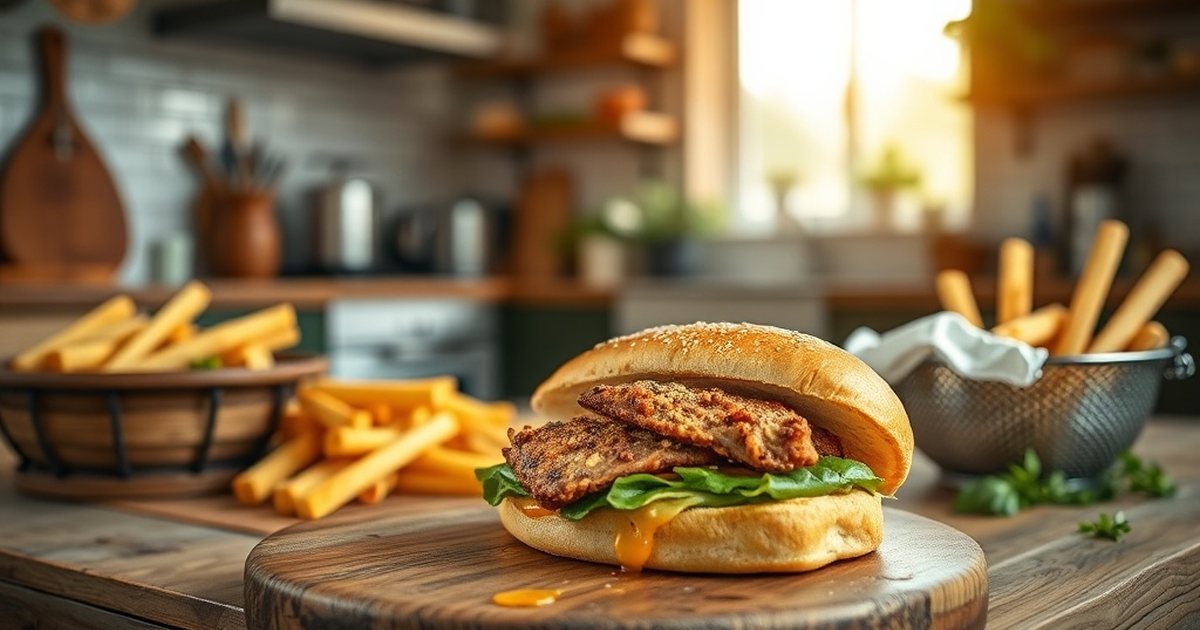
The Chick-fil-A Chicken Sandwich is one of the most obsessed-over fast food items in America, and for good reason. A thick, juicy breast of chicken cloaked in a shatteringly crisp, lightly seasoned crust, nestled in a buttery toasted bun with nothing but two cold, briny pickle chips — it is a study in restraint and precision. Since 1964, that formula has barely changed, which tells you everything about how well it works.
Making it at home means you control every variable: the quality of the chicken, the depth of the marinade, the temperature of the oil. The result is a sandwich that matches the spirit of the original and, with a little practice, rivals its texture and flavor while costing a fraction of what you’d spend at the drive-through.
About Chick-fil-A’s Chicken Sandwich
What defines the Chick-fil-A sandwich is its marinade. The chicken soaks in a mixture of pickle brine and milk, which simultaneously tenderizes the meat and seasons it all the way through. That faint tang you taste in every bite is not just pickles on top — it is built into the chicken itself. The breading blends all-purpose flour with powdered sugar and dry milk powder, two additions that might seem odd but are responsible for the sandwich’s signature golden color and tender, slightly sweet crust.
The frying temperature matters enormously. Chick-fil-A uses pressure fryers at around 325°F, which cooks the chicken through quickly without over-darkening the crust. At home, maintaining oil at 325–340°F achieves the same effect: a crust that is golden and crisp on the outside while the chicken inside stays moist. The finishing touch — buttered and toasted buns — adds richness that ties every component together.
Chicken Sandwich: Restaurant vs. Homemade Cost
| At Chick-fil-A | Homemade (4 sandwiches) | You Save |
|---|---|---|
| $22.76 | $11.77 | $10.99 (48%) |
Chick-fil-A price is the approximate cost of 4 Chick-fil-A Chicken Sandwiches at current menu pricing. Homemade cost is calculated from US average grocery prices (US BLS Average Price Data, May 2026).
Ingredient cost breakdown
| Ingredient | Amount | Cost |
|---|---|---|
| boneless skinless chicken breasts (4 pieces, pounded to even thickness) | 2 lb | $8.34 |
| dill pickle brine (from a jar of dill pickles) | 0.5 cup | — |
| whole milk, divided | 0.5 cup | $0.13 |
| large eggs | 2 each | $0.37 |
| all-purpose flour | 1.5 cup | $0.23 |
| powdered sugar | 2 tbsp | $0.06 |
| non-fat dry milk powder | 2 tbsp | — |
| peanut oil (or refined vegetable oil), for frying | 4 cup | $2.45 |
| plain white hamburger buns | 4 each | — |
| unsalted butter, softened | 2 tbsp | $0.20 |
| dill pickle chips | 16 each | — |
| seasoning mix: 1 tsp salt, 1 tsp paprika, 1/2 tsp garlic powder, 1/2 tsp black pepper, 1/4 tsp celery salt | 1 tbsp | — |
| Total (makes 4 sandwiches) | $11.77 | |
Pantry staples not counted: dill pickle brine (from a jar of dill pickles), non-fat dry milk powder, plain white hamburger buns, dill pickle chips, seasoning mix: 1 tsp salt, 1 tsp paprika, 1/2 tsp garlic powder, 1/2 tsp black pepper, 1/4 tsp celery salt (negligible cost).
Nutrition (estimated per serving)
Estimated from listed ingredients using USDA FoodData Central reference values. Actual values vary with brands, portions, and preparation.
How Much Does It Cost to Make Chick-fil-A’s Chicken Sandwich at Home?
A full batch makes 4 sandwiches for about $11.77 in ingredients — roughly $2.94 per serving. Ordering the equivalent at Chick-fil-A runs around $22.76, so making it yourself saves about $10.99 (48%). Those numbers come from current US average grocery prices (US BLS Average Price Data, May 2026), not estimates — the per-ingredient breakdown is in the table above. The savings are this large because you’re buying staple ingredients in bulk instead of paying for a prepared, served dish, and a single batch stretches across many servings.
Why Make It at Home?
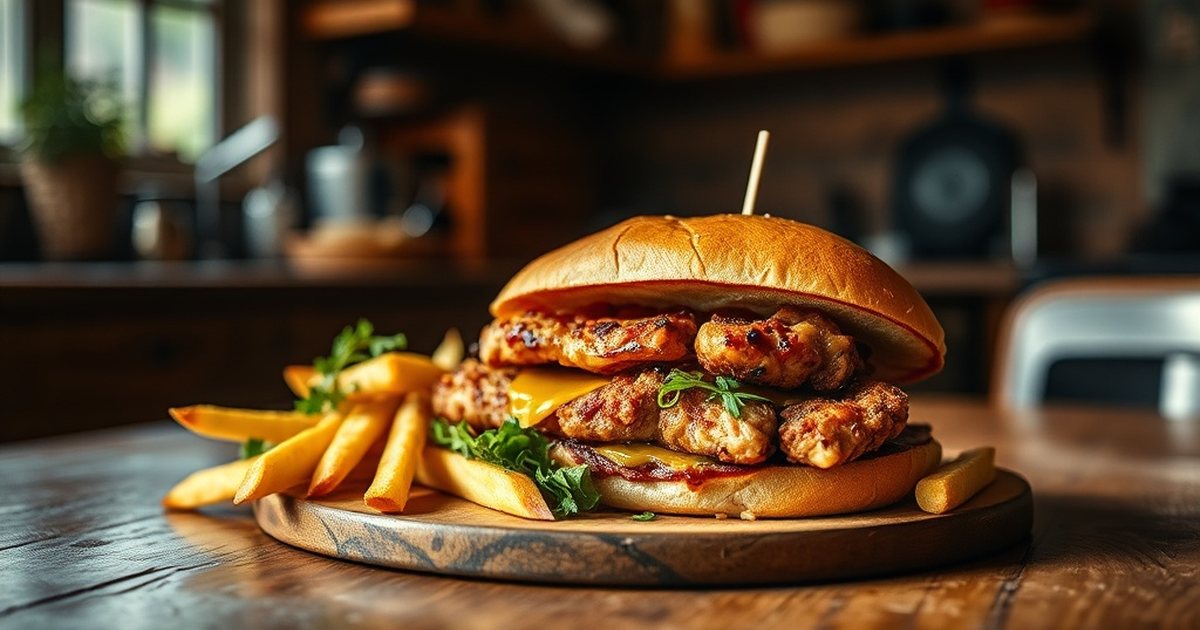
Making this sandwich at home costs roughly a third of what Chick-fil-A charges per serving, and you get to use higher-quality chicken than any fast food chain can source at scale. You can pound your breasts to a uniform thickness so every bite is equally juicy, fry to order so the crust is at its crispest, and load on however many pickles you like. It takes about an hour start to finish including marinade time, and the technique is simple enough to repeat on a weeknight.
Ingredients for Copycat Chick-fil-A Chicken Sandwich
Here’s the full ingredients list you’ll need to make Chick-fil-A Chicken Sandwich at home:
- 2 lb boneless skinless chicken breasts (4 pieces, pounded to even thickness)
- 0.5 cup dill pickle brine (from a jar of dill pickles)
- 0.5 cup whole milk, divided
- 2 each large eggs
- 1.5 cup all-purpose flour
- 2 tbsp powdered sugar
- 2 tbsp non-fat dry milk powder
- 4 cup peanut oil (or refined vegetable oil), for frying
- 4 each plain white hamburger buns
- 2 tbsp unsalted butter, softened
- 16 each dill pickle chips
- 1 tbsp seasoning mix: 1 tsp salt, 1 tsp paprika, 1/2 tsp garlic powder, 1/2 tsp black pepper, 1/4 tsp celery salt
A few ingredient notes:
- Use the pickle brine straight from a jar of plain dill pickles — not bread-and-butter pickles, which are too sweet. Vlasic or Claussen work well. The brine does double duty: it seasons and it gently breaks down muscle fibers so the chicken stays tender after frying.
- Dry milk powder is the least obvious ingredient and the one most worth tracking down. It adds a subtle dairy richness to the crust and helps it brown more evenly. Find it in the baking aisle near evaporated milk. If you skip it, the sandwich is still good, but the crust will be slightly less golden and complex.
- Peanut oil is the traditional choice and gives the closest flavor to the original, but refined vegetable or canola oil works well. The key word is refined — it has a high smoke point and neutral flavor. Avoid extra-virgin olive oil or unrefined options, which will smoke before reaching the right frying temperature.
🛒 Shop the Ingredients & Tools
- King Arthur all purpose flour
- Granulated white sugar
- Stainless steel mixing bowls
- Half sheet baking pan
As an Amazon Associate we earn from qualifying purchases.

How to Make Chick-fil-A Chicken Sandwich at Home
Prep: 40 min · Cook: 15 min · Makes: 4 sandwiches
- 1. Place chicken breasts between two sheets of plastic wrap and pound to an even 3/4-inch thickness. If the breasts are very large, slice them in half horizontally. You want each piece to be roughly bun-sized.
- 2. Combine the pickle brine and 1/4 cup of the whole milk in a zip-top bag or shallow bowl. Add the chicken, turn to coat, and refrigerate for at least 30 minutes and up to 4 hours. Do not marinate longer than 4 hours or the texture will become mushy.
- 3. In a wide, shallow bowl, whisk together the flour, powdered sugar, dry milk powder, and the spice blend until evenly combined. In a separate bowl, whisk the eggs with the remaining 1/4 cup of milk until smooth.
- 4. Remove the chicken from the marinade and pat it lightly dry — not bone dry, just blotted. Pour the frying oil into a heavy-bottomed pot or Dutch oven to a depth of about 2 inches. Heat over medium to 325–340°F. Use a thermometer; temperature control is the single biggest variable in how the crust turns out.
- 5. Working one piece at a time, dredge the chicken in the seasoned flour, pressing firmly so it adheres. Dip it into the egg wash, letting the excess drip off, then dredge again in the flour, pressing once more. Shake off any loose flour — a thick, even coating is the goal.
- 6. Carefully lower the coated chicken into the hot oil. Fry in batches of 1–2 pieces so the oil temperature does not drop sharply. Fry for 5–7 minutes per side, until deep golden brown and an instant-read thermometer reads 165°F at the thickest point. Transfer to a wire rack set over a baking sheet.
- 7. While the chicken rests, spread the cut sides of each bun with softened butter and toast them in a skillet over medium heat until golden, about 1–2 minutes.
- 8. Assemble immediately: place the chicken on the bottom bun, lay 4 pickle chips on top, and cap with the top bun. Serve right away while the crust is at its crispest.
Tips for the Best Results
- Let the breaded chicken rest on a wire rack for 2–3 minutes before frying. This helps the coating adhere so it doesn’t slip off in the oil.
- Fry at 325–340°F, not higher. A hotter oil cooks the outside too fast and leaves the center undercooked, or drives off moisture so fast the crust becomes tough.
- Do not crowd the pot. Adding too many pieces at once drops the oil temperature sharply and leads to a greasy, pale crust instead of a crisp golden one.
- Toast the buns in the same butter-coated skillet right before serving. A cold or room-temperature bun softens the crust underneath and mutes the whole sandwich.
Common Mistakes to Avoid
- Skipping the double dredge. One pass through the flour gives a thin, fragile crust. Two passes — flour, egg, flour — build the layers that create the characteristic shatter when you bite in.
- Marinating too long. More than 4 hours in pickle brine breaks down the chicken proteins so aggressively that the texture becomes soft and slightly stringy rather than tender and juicy.
- Using cold chicken straight from the fridge. Cold chicken drops oil temperature fast and can lead to uneven cooking. Let the chicken sit at room temperature for 10–15 minutes after breading before it goes into the oil.
- Adding too many toppings. The Chick-fil-A sandwich is defined by its minimalism — bun, chicken, pickles. Piling on lettuce, tomato, and sauce creates a different sandwich. Make it plain first so you can taste what the original is actually doing.
Variations to Try
- Spicy version: add 1 teaspoon of cayenne and 1/2 teaspoon of smoked paprika to the flour mixture, and brush the fried chicken with a few dashes of hot sauce before assembling.
- Deluxe version: add a leaf of green-leaf lettuce, a thick tomato slice, and a smear of Duke’s mayonnaise on the top bun — the way Chick-fil-A’s own Deluxe sandwich is built.
- Air-fryer adaptation: after double-dredging, spray the breaded chicken generously with cooking spray on both sides and air-fry at 375°F for 18–22 minutes, flipping halfway, until cooked through and golden. The crust will be lighter but still has good flavor.
Storage & Reheating
Store any leftover fried chicken (without the bun) in an airtight container in the refrigerator for up to 3 days. To reheat, place it on a wire rack set over a baking sheet and warm in a 375°F oven for 10–12 minutes until heated through and the crust re-crisps. Avoid the microwave — it steams the breading and turns it soft and rubbery. Buns are best toasted fresh; store them separately at room temperature.
What to Serve It With
Serve the sandwich as-is on a toasted buttered bun with dill pickles for the classic experience. Waffle fries are the natural partner — cut potatoes into waffle shapes with a mandoline or slice them thin for oven fries. A side of Chick-fil-A-style Polynesian sauce or honey mustard, both easy to make at home, rounds out the meal. For a lighter spread, a simple cole slaw made with shredded cabbage and apple cider vinegar cuts through the richness of the fried chicken.
The Bottom Line
Chick-fil-A’s Chicken Sandwich is one of those dishes that feels like it should be hard to make and expensive to buy — but at home it’s neither. For about $11.77 in everyday ingredients you get 4 sandwiches, fresh and warm, for roughly 48% less than ordering out. Make it once and it’ll join the short list of recipes you reach for without thinking. Bookmark this one, grab the ingredients, and keep an eye on CopyKitchen for more copycat favorites with the real cost to make them at home.

Frequently Asked Questions
Can I use chicken thighs instead of breasts?
Yes, and many home cooks actually prefer thighs for their higher fat content, which keeps them juicy even if they cook a minute or two past the target temperature. Boneless skinless thighs work well — pound or trim them to a roughly even thickness before marinating. The flavor will be slightly richer than the original, which uses breast meat exclusively.
Does the marinade need to include milk, or can I use just pickle brine?
The combination matters. Pickle brine seasons and tenderizes through its acidity and salt, but it can make the exterior slightly too wet and tangy if used alone. The milk balances the acidity and adds a subtle richness that helps the breading adhere and brown more evenly. If you are dairy-free, unsweetened oat milk or a splash of water works as a substitute.
Why does my breading fall off in the oil?
The two most common causes are not pressing the flour firmly enough during the dredge, and dropping the chicken into oil that is not hot enough. Both lead to a coating that slips off before it has time to set. Make sure to press the flour into the chicken firmly at each stage, rest the breaded pieces for a few minutes before frying, and verify your oil is at 325°F minimum before anything goes in.
Can I bake this instead of frying?
You can, though the result is noticeably different — the crust will be drier and less shatteringly crisp. If baking, spray the breaded chicken generously with oil, place it on a rack over a baking sheet, and bake at 425°F for 20–25 minutes, flipping once halfway. For the closest approximation to the original, frying is the method to use.
What makes Chick-fil-A’s sandwich taste different even when you follow a copycat recipe closely?
A few factors that are hard to replicate exactly: Chick-fil-A uses pressure fryers, which cook the chicken faster under pressure and produce a slightly different interior texture than open frying. They also use a proprietary seasoning blend and refined peanut oil at commercial scale. Home versions can match the flavor profile very closely, but the exact texture of the crust and the subtle depth of the seasoning will have small differences. Resting your oil at 325°F (rather than a hotter temperature) and using the dry milk powder closes that gap significantly.
How far ahead can I bread the chicken before frying?
You can bread the chicken and refrigerate it on a wire rack, uncovered, for up to 1 hour before frying. The coating will dry out slightly in the fridge, which actually helps it adhere better during frying. Do not bread it more than an hour ahead, or the moisture from the chicken will saturate the flour coating and make it gummy rather than crisp.
Cost figures use US BLS Average Price Data (US city average) and are estimates for comparison; your local grocery prices and Chick-fil-A’s current menu price will vary. As an Amazon Associate we earn from qualifying purchases. CopyKitchen is not affiliated with, endorsed by, or sponsored by Chick-fil-A or any brand mentioned; this is an independent, homemade copycat recipe, and all trademarks are the property of their respective owners.