Affiliate disclosure: As an Amazon Associate we earn from qualifying purchases. CopyKitchen is reader-supported; cost and savings references are general and your local prices will vary.
McDonald’s Hash Browns are one of the most iconic fast food breakfast items ever made — a golden, crispy oval of shredded potato with a shatteringly crunchy exterior and a tender, almost creamy interior. That specific texture is not an accident. It comes from a precise par-cooking step, careful moisture removal, and frying at the right temperature, techniques that are completely replicable in your own kitchen once you understand what is actually happening.
Making these at home costs a fraction of the drive-through price and produces a hash brown that is arguably better because you can eat it the moment it comes out of the oil, at peak crunch, rather than letting it steam in a bag on the way home. With russet potatoes, a handful of pantry staples, and one short par-boil session, you can produce four restaurant-quality hash brown patties in under an hour.
About McDonald’s Hash Browns
What separates a McDonald’s hash brown from a generic shredded potato cake is its uniform oval shape, its deep amber color on both flat faces, and that specific crunch-to-yield ratio. The interior is never gluey or raw-tasting, and the exterior never burns before the inside cooks through. That balance is achieved by par-cooking the potatoes before grating them, which gelatinizes some of the starch and gives the finished patty structural integrity without requiring a binder-heavy batter.
The small amount of flour acts as a light binder and helps the surface brown evenly, while the pinch of sugar mimics the dextrose present in the original formula, encouraging a deep, even Maillard reaction in the oil. Freezing the formed patties for 15 to 20 minutes before frying is the single most important technique step — it firms them up so they hold their shape when they hit the hot oil and do not fall apart or splay at the edges.
Hash Browns: Restaurant vs. Homemade Cost
| At McDonald’s | Homemade (4 hash brown patties) | You Save |
|---|---|---|
| $8.76 | $2.59 | $6.17 (70%) |
McDonald’s price is the approximate cost of 4 individual hash browns at McDonald’s. Homemade cost is calculated from US average grocery prices (US BLS Average Price Data, May 2026).
Ingredient cost breakdown
| Ingredient | Amount | Cost |
|---|---|---|
| russet potatoes (about 2 large) | 1.5 lb | $1.34 |
| all-purpose flour | 2 tbsp | $0.02 |
| granulated sugar | 0.5 tsp | $0.00 |
| vegetable oil, for frying | 2 cup | $1.23 |
| kosher salt | 1 tsp | — |
| onion powder | 0.25 tsp | — |
| black pepper | 0.125 tsp | — |
| Total (makes 4 hash brown patties) | $2.59 | |
Pantry staples not counted: kosher salt, onion powder, black pepper (negligible cost).
Nutrition (estimated per serving)
Estimated from listed ingredients using USDA FoodData Central reference values. Actual values vary with brands, portions, and preparation.
How Much Does It Cost to Make McDonald’s Hash Browns at Home?
A full batch makes 4 hash brown patties for about $2.59 in ingredients — roughly $0.65 per serving. Ordering the equivalent at McDonald’s runs around $8.76, so making it yourself saves about $6.17 (70%). Those numbers come from current US average grocery prices (US BLS Average Price Data, May 2026), so treat them as estimates — the per-ingredient breakdown is in the table above. The savings are this large because you’re buying staple ingredients in bulk instead of paying for a prepared, served dish, and a single batch stretches across many servings.
Why Make It at Home?
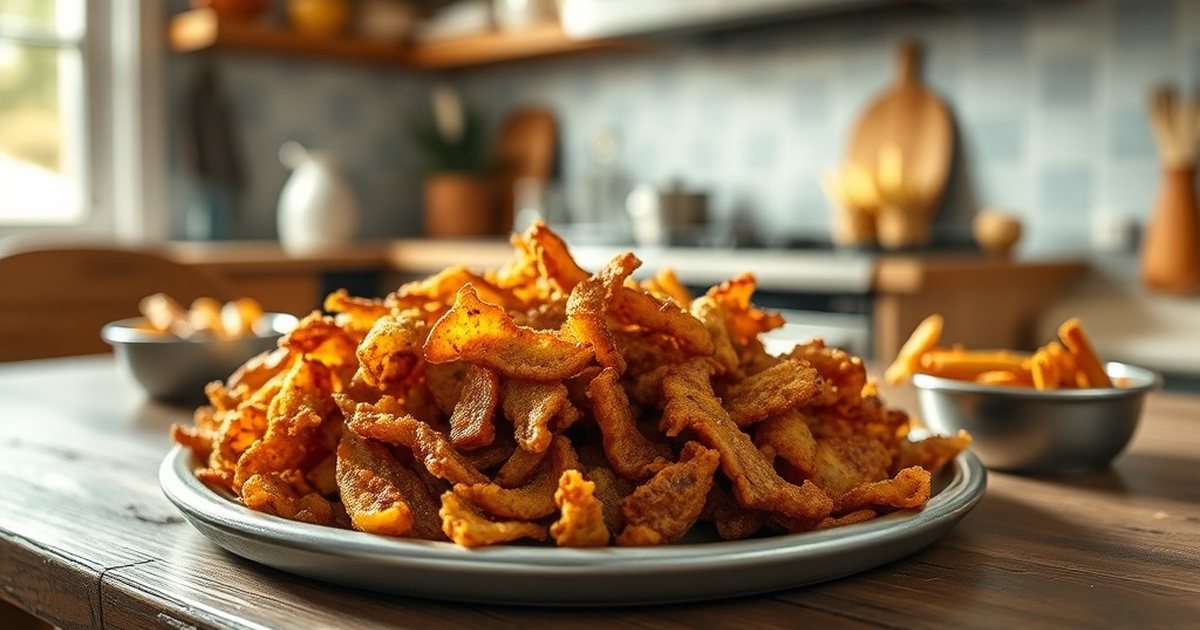
Four McDonald’s hash browns run nearly nine dollars before tax, and by the time you drive home they have softened considerably. Making them at home costs roughly two dollars for the same four patties, and you control every variable: the salt level, the oil freshness, and most importantly the timing. Pull them from the oil and serve immediately, and you will have a hash brown that out-crunches anything sitting under a heat lamp.
Ingredients for Copycat McDonald’s Hash Browns
Here’s the full ingredients list you’ll need to make McDonald’s Hash Browns at home:
- 1.5 lb russet potatoes (about 2 large)
- 2 tbsp all-purpose flour
- 0.5 tsp granulated sugar
- 2 cup vegetable oil, for frying
- 1 tsp kosher salt
- 0.25 tsp onion powder
- 0.125 tsp black pepper
A few ingredient notes:
- Russet potatoes are non-negotiable here. Their high starch and low moisture content produce the crispy exterior and fluffy interior the recipe depends on. Waxy varieties like Yukon Gold will give you a dense, gummy result.
- The granulated sugar is a small but meaningful detail. It mirrors the dextrose in McDonald’s formula and helps the surface caramelize to that deep golden-brown color without requiring higher heat that would burn the outside before the inside sets.
- Use a neutral high-smoke-point oil such as canola, soybean, or refined peanut oil. Olive oil and butter both burn at the required 350°F frying temperature and will give the patties an off flavor.
🛒 Shop the Ingredients & Tools
- King Arthur all purpose flour
- Granulated white sugar
- Stainless steel mixing bowls
- Half sheet baking pan
As an Amazon Associate we earn from qualifying purchases.

How to Make McDonald’s Hash Browns at Home
Prep: 25 min · Cook: 15 min · Makes: 4 hash brown patties
- 1. Peel the russet potatoes and place them whole in a pot of cold salted water. Bring to a boil over high heat and cook for exactly 8 to 10 minutes — the potatoes should be barely fork-tender at the outer edge but still firm and raw in the center. Drain immediately and spread on a sheet pan to cool to room temperature, then refrigerate uncovered for at least 30 minutes or up to overnight.
- 2. Using the large holes of a box grater, grate the cold par-cooked potatoes into a large bowl. Work quickly to keep the strands long and intact.
- 3. Add the flour, sugar, salt, onion powder, and black pepper to the grated potato. Toss gently with your hands until the seasonings and flour are evenly distributed without breaking up the shreds.
- 4. Divide the mixture into four equal portions. Place each portion on a piece of parchment paper and press firmly into an oval patty roughly 4 inches long, 2.5 inches wide, and half an inch thick. Compact them firmly so there are no loose edges.
- 5. Transfer the formed patties on their parchment to a sheet pan and freeze for 15 to 20 minutes until firm to the touch but not frozen solid.
- 6. Pour 1.5 to 2 inches of vegetable oil into a heavy skillet or straight-sided sauté pan and heat over medium-high to 350°F, verified with a thermometer.
- 7. Carefully lower the patties into the hot oil using a thin spatula. Fry without disturbing for 3 to 4 minutes until the bottom is deep golden brown, then flip once and fry the second side for 3 to 4 minutes more.
- 8. Transfer to a wire rack set over a sheet pan — not paper towels, which trap steam — and season immediately with a light pinch of salt. Serve within 5 minutes for maximum crunch.
Tips for the Best Results
- Refrigerating the par-cooked potatoes before grating is as important as the par-boil itself. Cold potatoes grate into clean, dry strands instead of wet, starchy mush.
- Do not squeeze or wring the grated potato. Because the potatoes are par-cooked and already partially dry, wringing removes too much moisture and the finished patty will be dense and mealy rather than light inside.
- Maintain the oil temperature between 340°F and 360°F throughout frying. If the oil drops below 325°F the patties will absorb oil and become greasy. Use a thermometer and adjust the burner between batches.
- Rest the finished patties on a wire rack, never a plate. The airflow underneath prevents the bottom crust from steaming soft while you finish frying the remaining patties.
Common Mistakes to Avoid
- Skipping the par-boil and using raw grated potato. Raw potato releases too much water during frying, which prevents browning and produces a dense, undercooked center even when the outside looks done.
- Forming the patties loosely. A patty that is not compressed firmly will fall apart the moment it hits the oil. Press each one hard enough that the mixture coheres into a solid disc with no ragged edges.
- Skipping the freeze step. Room-temperature patties soften slightly when they hit the oil and tend to puff and crack open. The 15-minute freeze gives them the structural rigidity to hold their shape through the first flip.
- Crowding the pan. Adding too many patties at once drops the oil temperature dramatically, extending cook time and causing the patties to absorb oil and turn greasy. Fry in batches of two if your pan is smaller than 12 inches.
Variations to Try
- Spicy hash browns: add a quarter teaspoon of cayenne pepper and a half teaspoon of smoked paprika to the seasoning mix before forming the patties.
- Cheesy hash brown patties: fold 2 tablespoons of finely shredded cheddar into the potato mixture before forming. The cheese melts into the interior and creates pockets of savory richness.
- Baked version: brush the formed patties generously with vegetable oil on both sides and bake on a preheated sheet pan at 450°F for 15 minutes per side. The result is less crispy than fried but still satisfying and substantially lower in fat.
Storage & Reheating
Leftover hash browns can be stored in an airtight container in the refrigerator for up to 3 days. To reheat, place them directly on the rack of an oven or toaster oven preheated to 400°F for 8 to 10 minutes, flipping once halfway through. Do not microwave them — the steam turns the crust rubbery and defeats the entire purpose. Formed but uncooked patties freeze well for up to 2 months; fry them directly from frozen, adding 1 to 2 extra minutes per side.
What to Serve It With
McDonald’s hash browns are a standalone breakfast item, and that is genuinely the best way to eat them — hot, plain, maybe with a drizzle of hot sauce or a side of ketchup for dipping. They pair naturally with scrambled eggs, fried eggs, and breakfast sausage for a full plate, and they work well alongside a simple egg and cheese sandwich on a toasted English muffin for a drive-through-style breakfast at home.
The Bottom Line
McDonald’s Hash Browns is one of those dishes that feels like it should be hard to make and expensive to buy, but at home it’s neither. For about $2.59 in everyday ingredients you get 4 hash brown patties, fresh and warm, for roughly 70% less than ordering out. Make it once and it’ll join the short list of recipes you reach for without thinking. Bookmark this one, grab the ingredients, and keep an eye on CopyKitchen for more copycat favorites with the real cost to make them at home.

Frequently Asked Questions
Why do my hash browns fall apart when I flip them?
The most common cause is skipping or shortening the freeze step. Freezing the formed patties for at least 15 minutes before frying gives the starch and flour binder time to set up so the patty holds together when it makes contact with hot oil. If they are still falling apart, make sure you are pressing the portions firmly when forming — they should feel like a dense, cohesive cake before they go in the freezer.
Can I use a different potato than russet?
Russet potatoes are strongly recommended because their high starch content and low moisture are what create the crispy exterior and fluffy interior. Yukon Golds and red potatoes have higher moisture and lower starch, which produces a denser, gummier result. If russets are unavailable, look for another high-starch variety labeled baking potato.
Do I really need to par-boil the potatoes?
Yes, and it is the step most home cooks skip that makes the biggest difference. Par-boiling gelatinizes some of the exterior starch, which means the shreds bind to each other slightly during frying rather than staying as loose individual strands. It also pre-cooks the center so the inside is done at the same time the outside achieves a deep golden crust.
Why is my hash brown greasy instead of crispy?
Greasiness almost always means the oil was not hot enough. When oil is below 325°F, the potato absorbs it rather than forming a crust that repels it. Use a thermometer to verify your oil is between 340°F and 360°F before adding the patties, and let the oil recover to that range between batches. Frying too many patties at once is the other common cause, since each cold patty drops the oil temperature.
Can I make these ahead of time for a crowd?
Yes, with one modification. Par-cook, grate, season, form, and freeze the patties up to two months in advance. On the day of serving, fry them directly from frozen with 1 to 2 extra minutes per side. This is actually the ideal make-ahead method because the freeze step is already built into the process. Do not fry them in advance and try to reheat — reheating never fully restores the original crunch.
What oil does McDonald’s use for hash browns?
McDonald’s fries hash browns in a blend of canola oil, soybean oil, and hydrogenated soybean oil. For home use, any neutral high-smoke-point oil will produce equivalent results. Canola oil is the most economical and widely available option. Refined peanut oil will give a slightly richer flavor, and refined coconut oil produces a particularly crispy crust, though it adds a faint coconut note some people notice.
Cost figures use US BLS Average Price Data (US city average) and are estimates for comparison; your local grocery prices and McDonald’s current menu price will vary. As an Amazon Associate we earn from qualifying purchases. CopyKitchen is not affiliated with, endorsed by, or sponsored by McDonald’s or any brand mentioned; this is an independent, homemade copycat recipe, and all trademarks are the property of their respective owners.